1. Overview
In recent years, high-end consumer electronic products have gradually shifted from aluminum alloy and stainless steel to titanium materials. From flagship smartphones and wearable watches to ultra-thin portable laptops, titanium alloys are increasingly adopted by mainstream electronic brands. Unlike traditional industrial materials, titanium features low density, high specific strength, excellent corrosion resistance and stable electromagnetic compatibility. These unique physical and chemical properties perfectly match the development trend of modern 3C products toward lightweight, thin-profile and long-service life. This article objectively analyzes the material characteristics, performance advantages, applicable scenarios and technical limitations of titanium in the 3C electronics industry from a technical perspective.
2. Fundamental Material Characteristics of Titanium
Titanium is a transition metal with an atomic number of 22. Its most prominent feature is the optimal balance between density and mechanical strength. The density of titanium is approximately 4.51g/cm³, about 40% lighter than stainless steel and slightly heavier than aluminum alloy. However, its tensile strength is far higher than aluminum alloy and comparable to common structural stainless steel.
In addition, titanium possesses active chemical properties. A dense and self-repairing inert oxide film will be automatically formed on its surface when exposed to air. This oxide layer isolates the base material from external moisture, acidic substances and corrosive media, which is the core reason why titanium outperforms most structural metals in corrosion resistance. At the same time, pure titanium and most titanium alloys are hypoallergenic and biologically inert, causing no irritation to human skin.
3. Core Performance Advantages in 3C Electronics
3.1 Lightweight and High Specific Strength
The lightweight requirement has always been one of the key technical pain points of portable electronic devices. Under the same structural design and strength standards, titanium structural parts can reduce the overall weight of equipment by 15%–40% compared with stainless steel parts. For handheld devices such as mobile phones and watches, weight reduction can effectively alleviate wrist and palm fatigue caused by long-term use. Meanwhile, titanium can maintain structural rigidity under an ultra-thin wall thickness (0.5mm–0.8mm), which adapts to the design requirements of borderless screens and foldable screens for current mainstream electronic products.
3.2 Excellent Anti-Corrosion and Wear Resistance
Daily electronic devices are often eroded by human sweat, grease, cosmetic residues, humid air and salt fog environments. Aluminum alloy shells are prone to oxidation and discoloration, while stainless steel is easy to be corroded by acidic sweat. Thanks to the self-healing oxide film, titanium can effectively resist daily chemical corrosion. In terms of surface hardness, titanium can further enhance scratch resistance through anodizing and coating treatment, solving the common problem of shell wear and fading during daily use of electronic products.
3.3 Good Electromagnetic Compatibility
Electromagnetic signal shielding is a major problem restricting the application of metal shells for electronic equipment. Traditional metal materials will reflect and attenuate electromagnetic waves, resulting in poor signals of mobile phones, Bluetooth and GPS. Titanium has low electromagnetic shielding characteristics and weak attenuation effect on radio frequency signals. It can greatly simplify the antenna layout of electronic products, reduce redundant grooving structures on the shell, and improve the integration and integrity of industrial design.
3.4 Hypoallergenic and Aesthetic Properties
All products that need long-term direct contact with human bodies have strict requirements on material safety. Nickel elements contained in stainless steel are likely to cause skin allergies to sensitive groups. Titanium materials are nickel-free and biologically safe, suitable for wearable devices such as smart watches and wireless earbuds. In terms of appearance, titanium presents a low-gloss and delicate metallic texture. After sandblasting and anodizing, it can form stable color layers of different tones, with higher texture than traditional metal materials.
4. Main Application Scenarios
4.1 Smartphone Structural Components
The middle frame is the core load-bearing structure of a smartphone, which needs to bear external impact and bending force. At present, many flagship mobile phones use Grade 5 titanium alloy to replace stainless steel to manufacture middle frames. It not only improves the drop resistance and bending resistance of the whole machine, but also realizes lightweight optimization, balancing user experience and structural safety.
4.2 Smart Wearable Devices
Smart watches and sports bracelets have extremely strict weight control requirements due to long-term wearing. Titanium watch cases and connecting parts have become the preferred materials for high-end wearable devices. Its sweat corrosion resistance and hypoallergenic properties can adapt to sports scenarios and daily all-day wearing scenarios.
4.3 High-End Portable Notebooks & Peripherals
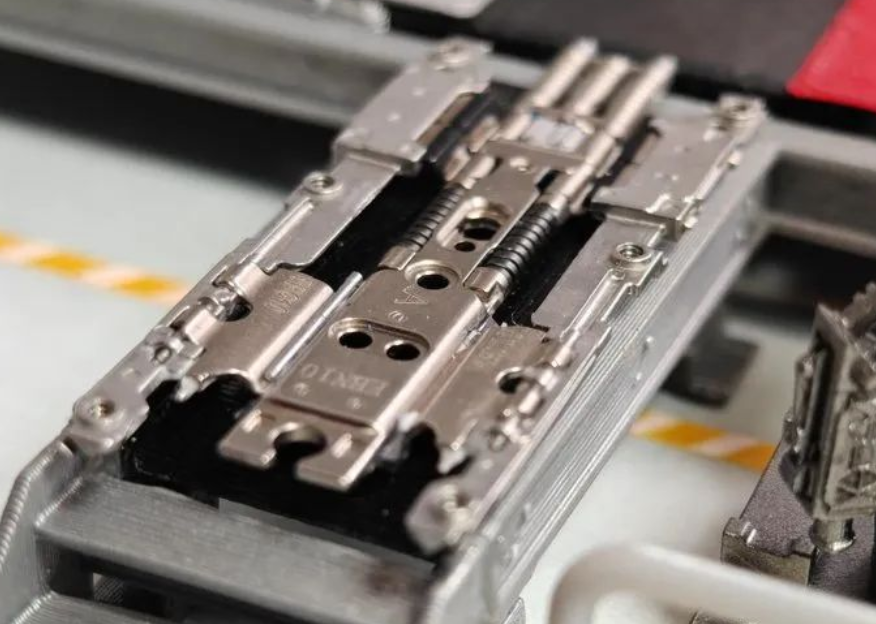
For ultra-thin business notebooks, titanium is used for hinge components, internal reinforcing plates and partial shell structures to reduce the overall weight of the notebook without reducing the torsion resistance and compression resistance of the fuselage. In addition, titanium is also applied to high-end earphone shells and camera accessories by virtue of its vibration damping performance and lightweight characteristics.
5. Current Technical Challenges
Although titanium has comprehensive performance advantages, it still has certain limitations in large-scale popularization. First of all, titanium has high hardness and poor thermal conductivity, resulting in high processing difficulty and serious tool loss during CNC machining, which directly increases manufacturing costs. Secondly, the forming process of complex special-shaped parts is complicated, and the mass production cycle is longer than that of aluminum alloy. In addition, compared with mature aluminum alloy surface treatment technology, the color coating process of titanium still needs further iterative optimization to meet diversified personalized customization needs.
6. Summary
From the perspective of material properties, titanium is one of the most suitable structural materials for the next generation of high-end portable 3C electronic products. Its unique lightweight and high-strength characteristics, corrosion resistance and signal compatibility perfectly solve many pain points of traditional metal materials. With the continuous upgrading of MIM molding, precision CNC and surface treatment processes, the production cost of titanium parts will be gradually reduced. In the future, titanium is expected to expand from flagship high-end products to mid-range consumer electronic products and become the mainstream structural material in the 3C industry.
Applications4 min read·2026-05-27
Advantages and Applications of Titanium in 3C Electronics
This article explores how titanium materials are applied in real-world industrial projects, focusing on material selection, corrosion resistance, fabrication processes, and technical documentation for 3C electronics applications.