Introduction
The rise of smart and electric cars has sparked a growing interest in advanced materials that can reduce weight, improve range, and enhance safety. Titanium, with its legendary strength-to-weight ratio and corrosion resistance, often comes up in these discussions, leading many to wonder: are smart cars made of titanium?
This guide separates fact from fiction, based on industrial specifications from CNBJTI, explaining why titanium is not used for mass-produced vehicle bodies, where it does find applications in the automotive industry, and the practical realities of using titanium in cars.
Why Titanium Isn’t Used for Mass-Produced Smart Car Bodies
The short answer is no, mainstream smart cars are not made of titanium. There are three core reasons for this:
First, prohibitive cost. Titanium raw material is significantly more expensive than steel or aluminum. The cost difference alone makes it impossible to use titanium for the main body structure of mass-market vehicles, where cost control is critical.
Second, difficult manufacturing. Titanium is notoriously hard to machine, form, and weld. The automotive industry relies on high-speed, low-cost manufacturing processes like stamping and spot welding, which are not well-suited to titanium. Tooling and production line changes required to work with titanium would be prohibitively expensive.
Third, over-engineering for most applications. While titanium is strong, modern high-strength steels and advanced aluminum alloys already meet the safety and lightweight requirements for most passenger vehicles. The extra performance of titanium is unnecessary for everyday driving.
Where Titanium Is Used in Automotive Applications
While you won’t find a titanium-bodied Toyota or Tesla, the metal does appear in specific, high-performance parts of some vehicles.
High-Performance and Racing Cars
In Formula 1, NASCAR, and supercars, titanium is used for parts where every gram of weight reduction matters. Common applications include:
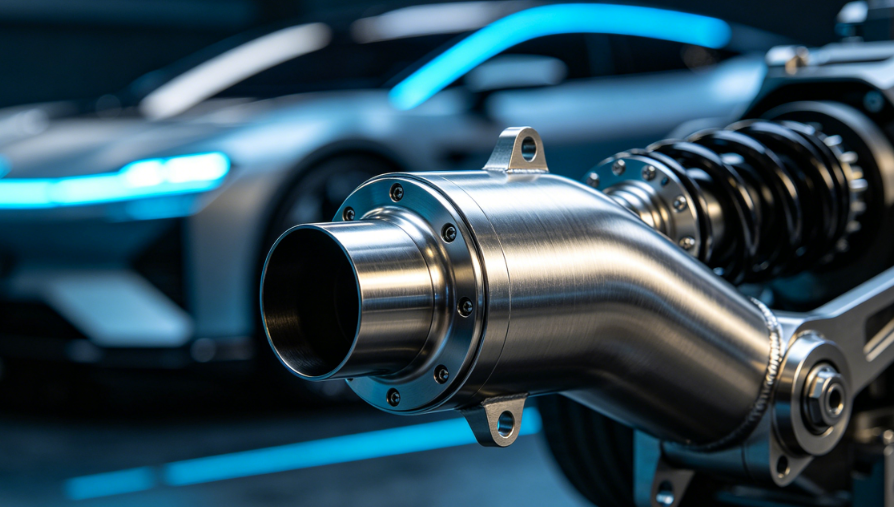
Exhaust systems, where its high heat resistance and light weight are ideal.
Connecting rods, valves, and other engine components that benefit from its strength and low reciprocating mass.
Suspension springs and fasteners to reduce unsprung weight.
Luxury and Specialized Vehicles
Some ultra-luxury or limited-edition cars use titanium for cosmetic or functional components, like exhaust tips, heat shields, or decorative trim pieces, leveraging its unique look and corrosion resistance.
The Future of Titanium in Electric and Smart Cars
While not used for main structures, electric and smart cars are creating new opportunities for advanced materials.
Electric vehicles are constantly looking for ways to reduce weight to improve range. While aluminum is the primary choice for lightweighting, titanium could see increased use in specific high-temperature or high-stress components, such as battery pack heat shields or lightweight fasteners.
However, widespread adoption in mass-produced vehicles is unlikely unless significant advances in titanium production and manufacturing processes drastically reduce costs.
Comparing Titanium to Other Automotive Materials
To understand why titanium isn’t mainstream, it’s helpful to compare it to the dominant materials:
Steel: The workhorse of the automotive industry, offering low cost, easy manufacturing, and proven crash performance.
Aluminum: Lighter than steel, more expensive but still far cheaper than titanium, and widely used in body panels and structural parts.
Carbon Fiber: Used in high-end sports cars for its extreme light weight and strength, but even more expensive than titanium for mass production.
Titanium sits in a niche between these materials, offering unique properties but at a price that only makes sense for the most demanding applications.
Conclusion
Smart cars are not made of titanium. While the metal’s properties are impressive, its high cost and difficult manufacturing process make it impractical for mass-produced vehicles. It remains a material for high-performance racing cars, luxury components, and specialized parts, not everyday consumer cars. The future of lightweighting in smart cars lies with advanced steels and aluminum alloys, not titanium.
FAQ5 min read·2026-06-08
Are Smart Cars Made of Titanium? Reality vs. Hype in Modern Automotive Materials
A practical CNBJTI guide to titanium in smart cars, exploring why titanium is not used for mainstream vehicle bodies, where it does appear in high-performance and luxury applications, and how it compares to aluminum and steel for automotive use.