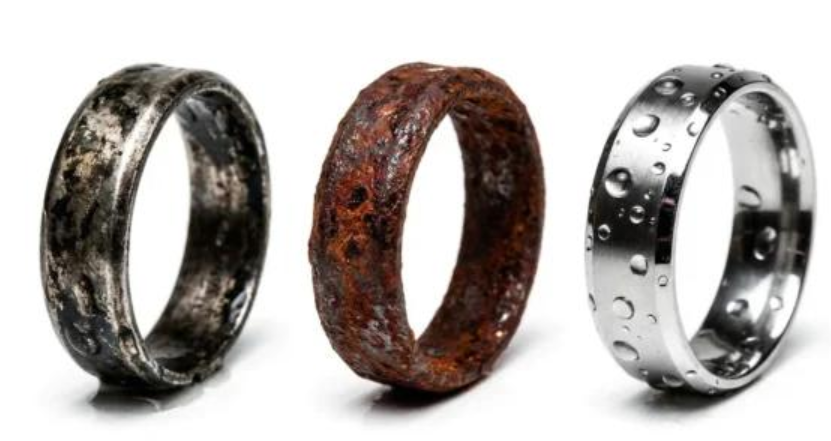
Short answer: No, pure titanium does not tarnish under normal conditions. Unlike silver, brass, or low-grade steel, titanium maintains its finish and appearance over time, even in humid, salty, or high-contact environments.
If you’re a B2B buyer sourcing titanium for jewelry, marine hardware, outdoor equipment, or consumer wearables, understanding titanium’s tarnish resistance is critical for product quality, customer satisfaction, and long-term performance. Below, we break down the science, common myths, and key sourcing considerations from CNBJTI.
Why Titanium Does Not Tarnish
Titanium’s resistance to tarnish is rooted in three unique material properties that set it apart from most other metals:
1. Self-Healing Passive Oxide Layer
When exposed to air or moisture, titanium instantly forms a thin, dense layer of titanium dioxide (TiO₂) on its surface. This layer is:
Chemically inert: It does not react with oxygen, sulfur, sweat, or most environmental pollutants.
Self-healing: If scratched or damaged, the oxide layer reforms immediately to restore protection.
Non-conductive: It prevents metal ion leaching and corrosion, eliminating the primary cause of tarnish.
This barrier acts like a permanent, invisible shield, keeping the underlying metal untouched by its environment.
2. No Reaction With Sulfur or Humidity
Most metals tarnish due to a reaction with sulfur compounds in the air, forming dark, dull sulfide layers. Titanium does not react with sulfur, even in high-humidity, coastal, or industrial settings. It will not turn black, discolor, or develop a patina—unlike silver, copper, or bronze.
3. Stable Through Prolonged Use
For consumer wearables, jewelry, or medical devices, titanium remains unchanged with repeated exposure to sweat, oils, cleaning products, and body fluids. It will not discolor skin, stain fabrics, or lose its luster, reducing returns and improving customer satisfaction.
What Looks Like “Tarnish” On Titanium?
While titanium itself does not tarnish, two surface conditions are often mistaken for tarnish:
1. Anodization or Heat-Induced Color Changes
When titanium is heated above 300°C or treated with controlled electrochemical anodization, the oxide layer thickens. This creates light interference, resulting in vibrant, permanent colors (gold, blue, purple, bronze). This is a deliberate finish, not corrosion, and is widely used in jewelry and consumer products.
2. Surface Contamination or Residue
Manufacturing oils, environmental debris, or improper cleaning can leave a dull film on titanium parts. This is easily removed with standard cleaning processes and is not a permanent change to the material.
Best Titanium Grades for Tarnish Resistance
For applications where long-term appearance and corrosion resistance are critical, prioritize these grades:
Commercially Pure Titanium (Grades 1 & 2): The most stable and tarnish-resistant options, ideal for jewelry, marine hardware, and wearable tech.
Grade 4 Pure Titanium: Higher strength than Grades 1/2, while retaining full tarnish resistance—perfect for structural outdoor components.
Ti-6Al-4V ELI (Grade 23): Medical-grade alloy with ultra-low interstitial elements, offering excellent stability for implants and high-performance devices.
Standard Grade 5 (Ti-6Al-4V) is also tarnish-resistant in most industrial environments, though pure grades are preferred for aesthetic or highly corrosive applications.
How CNBJTI Delivers Tarnish-Resistant Titanium
As a dedicated titanium supplier, we help B2B buyers ensure consistent performance and appearance:
Verified purity: Full material test reports (MTRs) confirm chemical composition and the absence of impurities that could compromise corrosion resistance.
Contamination-free processing: Dedicated titanium production lines eliminate cross-contact with other metals, preventing surface residue.
Custom finishes: Controlled passivation, cleaning, and anodization services to meet your aesthetic and performance needs.
Application-specific guidance: Our engineering team recommends the right grade and processing for your environment, whether marine, medical, or consumer-facing.
Source High-Quality Titanium With Confidence
If you need titanium for applications requiring zero tarnish and long-term durability, CNBJTI can help.
Submit your RFQ today for:
Custom grade recommendations based on your use case
Detailed compliance and material documentation
Competitive bulk pricing
Support for custom processing and finishes
FAQ5 min read·2026-05-22
Does Titanium Tarnish?
Does titanium tarnish? No. Pure titanium resists tarnish, corrosion, and discoloration in all normal environments. Learn about the science, best grades, and sourcing tips from CNBJTI.