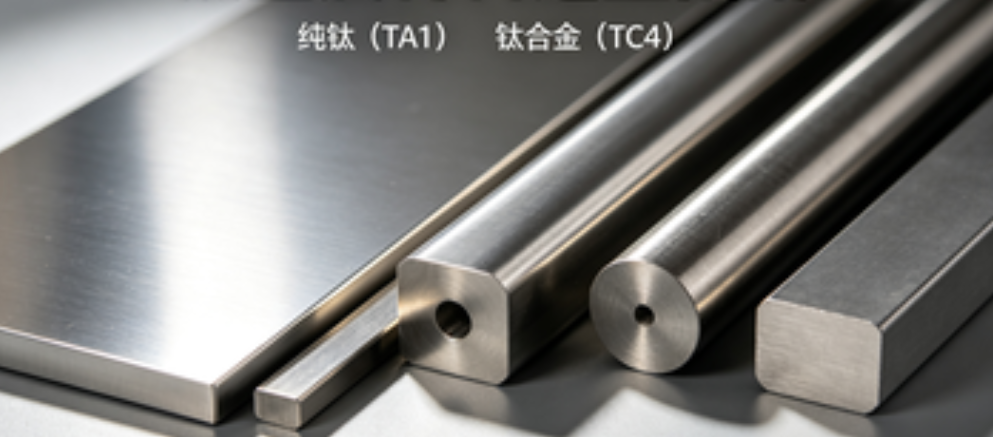
Introduction
For global metal purchasers, mechanical designers and processing manufacturers, selecting a suitable titanium grade directly affects equipment service life, production cost and finished product stability. Different titanium grades vary widely in corrosion resistance, tensile strength, formability and price, leading to confusion during project material picking. This FAQ-style article sorts core selection standards of mainstream commercial titanium grades, customized for CNBJTI’s procurement, technical evaluation and RFQ work.
Q1: Core difference between Commercially Pure Titanium (Grade1/Grade2)
Grade1 and Grade2 belong to unalloyed pure titanium, featuring outstanding ductility and excellent corrosion resistance against seawater, dilute acid and atmospheric environment.
Grade1 owns the lowest iron and oxygen impurity content, best bending & deep drawing performance, mainly used for thin-wall corrosion-resistant liners, flexible titanium tubes and ultra-thin sheet stamping parts.
Grade2 is the most versatile general pure titanium grade, balancing formability and mechanical strength, becoming the most popular option for chemical vessels, desalination equipment and conventional corrosive pipeline projects.
Applicable scene: Projects prioritizing anti-corrosion performance over high structural strength.
Q2: When to pick Grade5 Titanium Alloy (Ti-6Al-4V)
Grade5 Ti-6Al-4V is the most widely used alpha-beta titanium alloy with aluminum and vanadium added to greatly improve tensile strength, around twice higher than Grade2 pure titanium. Its corrosion performance is slightly inferior to commercial pure titanium but still stable under mild corrosive medium.
It is preferred for load-bearing structural parts, marine fasteners, mechanical equipment frames and high-pressure fluid components where both strength and basic rust resistance are required.
Applicable scene: Structural components under mechanical load with moderate corrosion environment.
Q3: Key auxiliary factors affecting grade selection
1. Working medium & anti-corrosion demand
If components run in long-term seawater, brine or dilute acid environment, prioritize Grade1/Grade2 pure titanium; For dry atmospheric or low-salinity mild corrosion working conditions, Grade5 alloy can meet demands.
2. Subsequent processing technology
Products needing bending, deep drawing and complex stamping forming choose low-hardness Grade1/Grade2 pure titanium; Parts for forging, CNC machining and high-load assembly adopt Grade5 titanium alloy.
3. Cost budget control
Pure titanium has lower raw material cost than titanium alloy. For non-load-bearing anti-corrosion spare parts, Grade2 pure titanium effectively cuts procurement expense without sacrificing core anti-rust property.
Q4: Procurement & certification tips for buyers
Before sending RFQ to suppliers, confirm material standard first: mainstream titanium follows ASTM B348 for bar, ASTM B265 for titanium sheet. Request official material test certificate (MTC) from manufacturers to verify chemical composition and mechanical data matching selected grade.
CNBJTI standardizes grade inspection during incoming quality check to avoid wrong-grade mixing and post-processing failure risks.
Conclusion
Grade selection of titanium revolves around three core dimensions: working environment corrosion level, mechanical load requirement and post-processing craft. Mastering Grade1, Grade2 and Grade5 application scope helps buyers avoid over-specification waste or under-specification equipment damage during ordering.
FAQ5 min read·2026-06-03
How to Choose the Right Titanium Grade: Complete Buying Guide for Industrial Manufacturers & Procurement Engineers
This practical CNBJTI FAQ guide helps global buyers pick proper titanium grades, covering pure Ti & Ti alloy property comparison, machining tips, material certification and RFQ quotation essentials for industrial project procurement.