Introduction
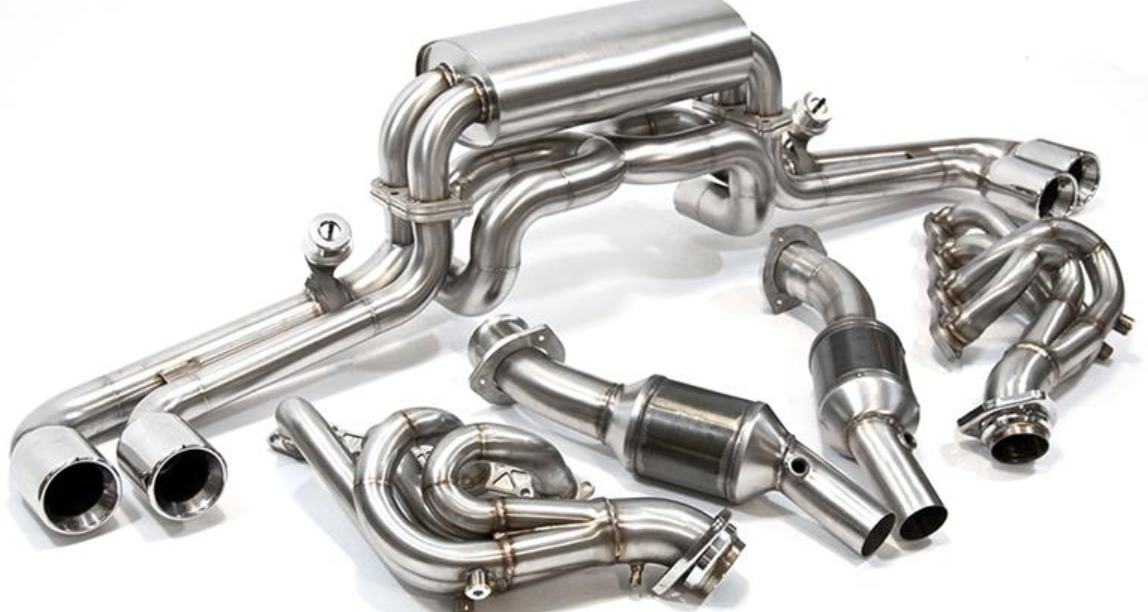
Titanium exhaust systems are widely used in high-performance motorcycles, racing vehicles, and modified automotive equipment due to their unique metallurgical advantages. Compared with stainless steel and carbon steel exhausts, titanium features an ultra-high strength-to-weight ratio, excellent high-temperature oxidation resistance, and stable mechanical performance under extreme thermal cycling. The iconic blue and purple heat tint on titanium exhaust surfaces is not paint or coating, but a natural titanium dioxide oxide layer formed by high-temperature oxidation. To preserve structural stability, surface uniformity, and service life, titanium exhausts require scientific and standardized cleaning and maintenance, different from conventional metal exhausts. This article explains the underlying material principles and provides professional, technical-level cleaning and long-term maintenance methods.
Material Science: Why Titanium Exhausts Require Special Maintenance
The core reason titanium exhausts cannot be cleaned with ordinary metal maintenance methods lies in its chemical and physical properties. Titanium is an active metal that rapidly generates a dense, self-healing TiO₂ passive film when exposed to air. This film is the fundamental source of titanium’s corrosion resistance. Under the continuous high-temperature working environment of exhaust systems between 400°C and 700°C, the oxide layer gradually thickens and produces thin-film interference, forming the unique gradient heat tint from gold to blue and purple.
Unlike inert stainless steel, titanium is sensitive to strong acids, strong alkalis, and chloride-containing substances. Improper cleaning will cause local etching, damage the passive film, and result in uneven discoloration, pitting, and accelerated thermal fatigue aging. In addition, titanium has a low thermal expansion coefficient. Rapid temperature changes during cleaning will produce internal thermal stress, forming invisible microcracks on the pipe wall, which gradually expand under long-term engine vibration and high-temperature cycling, ultimately affecting structural safety.
Pre-Cleaning Technical Preparation and Safety Standards
Before any cleaning operation, thermal stabilization and contamination assessment must be completed to avoid permanent material damage. First, the exhaust system must be fully cooled to ambient temperature. Cleaning hot titanium surfaces will cause severe thermal shock, destroy the uniformity of the oxide layer, and induce microcrack defects.
Second, confirm the type of surface contaminants. Surface attachments of titanium exhausts are divided into organic contaminants and inorganic contaminants. Organic contaminants include unburned hydrocarbon oil stains, engine soot, and carbon deposits formed by long-term high-temperature combustion. Inorganic contaminants mainly come from road salt, brake dust, and atmospheric corrosive particles. These inorganic impurities will adhere to the oxide layer and absorb moisture, inducing localized electrochemical corrosion.
Finally, seal internal components such as exhaust mufflers, sound-absorbing cotton, and built-in sensors to prevent cleaning solution and water from penetrating the interior, which may cause sound-absorbing material deterioration and circuit failure.
Step 1: Scientific Removal of Organic Carbon Deposits and Oil Stains
The core principle of cleaning is to remove surface contaminants without damaging the natural TiO₂ passive layer. It is necessary to use a neutral pH cleaning solution with non-ionic surfactants, avoiding acidic, alkaline, chlorine-containing, and abrasive cleaners. Neutral formula can effectively emulsify oil stains and loose carbon deposits without etching the oxide film.
After preparing the cleaning solution, apply it evenly on the exhaust surface with a lint-free microfiber cloth and let it stand for two to three minutes to fully decompose surface attachments. For partial stubborn carbon deposits, use an ultra-fine soft nylon brush with low-pressure auxiliary cleaning. Do not use steel wool, scouring pads, or hard abrasive tools, so as not to scratch the dense oxide layer and leave permanent texture damage.
After cleaning, rinse the surface completely with clean low-pressure water and dry it immediately with a clean towel. Residual water droplets will form mineral precipitation marks after air-drying, which will become new corrosion induction points and affect the surface stability of the titanium exhaust.
Step 2: Technical Treatment of Surface Discoloration and Heat Tint
The heat color gradient of titanium exhaust is a normal physical phenomenon of thin-film light interference, not surface aging or damage. Daily maintenance does not need to remove the heat tint. For local dullness, faded areas, or slight stain marks caused by long-term use, non-abrasive special metal polishing agents for non-ferrous metals can be used for localized repair.
When polishing, adopt linear uniform wiping instead of circular friction to avoid irregular swirl marks on the metal surface. The polishing dosage should be controlled reasonably, and excessive polishing should be avoided to prevent excessive removal of the natural oxide layer and affect the original heat color gradient and corrosion resistance.
If uniform and beautiful heat tint needs to be restored, artificial uniform thermal oxidation is the safest method. After the surface is completely cleaned and dried, run the engine stably to make the exhaust work at a constant temperature, so that the oxide layer grows evenly and forms a natural and smooth color transition. Local high-temperature heating with open fire is prohibited, which will cause inconsistent oxide layer thickness and chaotic color difference.
Step 3: Post-Cleaning Passivation Protection and Anti-Corrosion Treatment
After cleaning and polishing, residual trace cleaning agents and surface charged particles need to be neutralized to restore the stable state of the titanium passive film. A mild neutralizing solution can be used for overall wiping treatment to eliminate residual acidic and alkaline components.
For vehicles used in coastal, high humidity, and saline-alkali road environments, protective treatment is required after drying. A thin layer of titanium-specific protective agent or food-grade inert mineral oil can be applied to isolate air moisture, salt fog, and corrosive particles, effectively delaying the aging and corrosion of the oxide layer and maintaining the long-term stability of the exhaust surface performance.
Long-Term Professional Maintenance Mechanism
Daily scientific maintenance can effectively extend the service life of titanium exhausts and avoid thermal fatigue and local corrosion failure. Regular dry wiping should be carried out during daily use to timely remove floating dust and surface attachments and prevent contaminants from combining with the high-temperature oxide layer to form stubborn deposits.
Regular neutral water cleaning and slight surface maintenance are required for long-term used exhausts to thoroughly clean accumulated road salt and brake dust and eliminate potential corrosion risks. It is necessary to regularly inspect the welding seams, hanging points, and pipe body surfaces of the exhaust system to check for thermal fatigue cracks, stress deformation, and local abnormal discoloration caused by uneven heating.
At the same time, regular overall air tightness detection is matched to ensure the structural stability of the exhaust system under long-term high-temperature vibration and thermal cycling working conditions.
Technical Sourcing Guide for High-Quality Titanium Exhausts
The service life, thermal stability, and color uniformity of titanium exhausts are fundamentally determined by material grade and processing technology. Most high-performance exhaust systems on the market adopt Grade 1 and Grade 2 commercially pure titanium. These two grades of pure titanium have excellent ductility, weldability, high-temperature oxidation resistance, and thermal fatigue resistance, which are most suitable for long-term high-temperature cycling working conditions of exhaust systems.
Grade 5 titanium alloy has high strength but poor weldability and strong brittleness, so it is not suitable for thin-walled exhaust pipe processing and is rarely used in exhaust system manufacturing. In terms of processing technology, high-quality titanium exhausts have uniform pipe wall thickness, smooth and full welds, and no welding defects such as virtual welding and missing welding. Standard pickling and bright annealing surface treatment can remove surface stress and impurities, helping to form a uniform and stable thermal oxidation layer in long-term work.
Professional titanium exhaust manufacturing and strict material selection and processing standards can effectively reduce later maintenance costs and improve the overall performance and service life of the exhaust system. CNBJTI provides standardized titanium exhaust raw materials and customized processing solutions, supporting high-performance and high-stability exhaust system production for modified vehicles and racing equipment.
FAQ6 min read·2026-05-25
How to Clean and Maintain a Titanium Exhaust: Step-by-Step Guide
Learn how to safely clean, polish, and maintain your titanium exhaust to restore its shine and extend its lifespan, plus key tips for choosing high-quality titanium exhaust systems.