Introduction
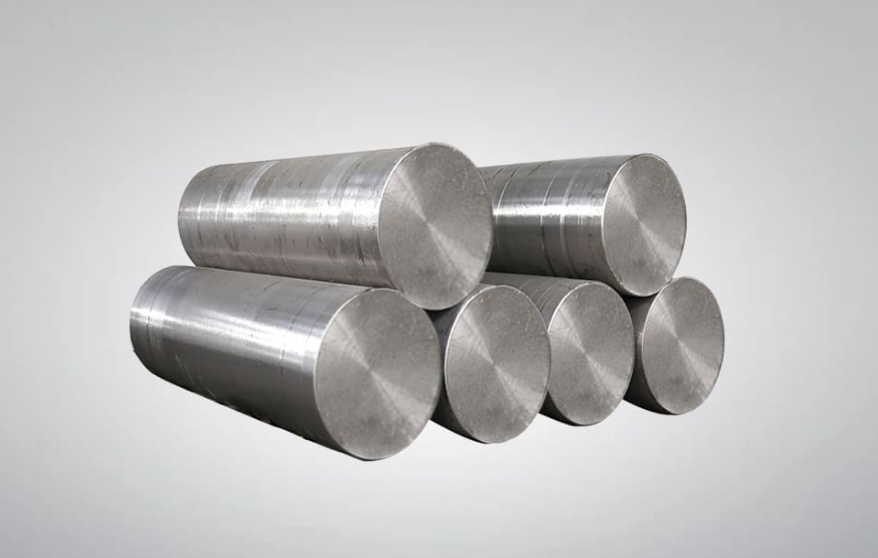
Titanium bars serve as the fundamental raw blank for CNC machined parts, fasteners, aerospace components and chemical equipment fittings, widely split into Grade2 pure titanium bar and Grade5 Ti-6Al-4V alloy bar. Many industrial buyers and mechanical engineers wonder about the full production workflow of titanium bars, as production technology directly decides finished bar dimensional accuracy, mechanical property and corrosion resistance. This CNBJTI FAQ breaks down the complete production steps from sponge titanium raw material to finished titanium bar, core in-process quality inspections and practical sourcing tips for global procurement buyers.
Step 1: Raw Material Preparation – Sponge Titanium & Alloy Compounding
All titanium bar production originates from sponge titanium, the primary smelting raw material refined from titanium ore.
For pure titanium bar (Grade1/Grade2): Use qualified high-purity sponge titanium without extra alloy additives.
For alloy titanium bar (Grade5 Ti-6Al-4V): Mix sponge titanium with pre-proportioned aluminum-vanadium intermediate alloy according to standard chemical composition formula, to guarantee final alloy element content complies with ASTM B348 specification.
Raw materials go through impurity screening before compacting into dense electrode blocks for subsequent vacuum melting.
Step 2: Vacuum Arc Remelting (VAR) for Titanium Ingot
Compressed electrode blocks are fed into vacuum arc remelting furnace under high vacuum environment to avoid titanium’s high-temperature oxidation with air. Under high-current arc heating, raw materials melt into uniform liquid titanium then solidify into large-size titanium ingot.
This smelting step eliminates internal porosity, segregation and impurity inclusion inside ingot, which is the core procedure to ensure titanium bar internal metallurgical quality; high-grade aerospace titanium ingots usually adopt double VAR remelting process for higher purity.
Step3: Hot Forging & Hot Rolling for Semi-finished Titanium Bar
Hot Forging: Heat solid titanium ingot to specified forging temperature inside heating furnace, then forge repeatedly via hydraulic forging press to break coarse original casting grain, refine internal metal structure and turn big ingot into intermediate billet with regular round/rectangular shape.
Hot Rolling: Pre-forged titanium billet is continuously heated and rolled by professional titanium mill, gradually reduced cross-section dimension to approach target bar size, forming hot-rolled rough titanium bar with black oxide outer skin.
Step4: Cold Finishing & Surface Treatment
Hot rolled black skin titanium bar goes through follow-up precision finishing to reach finished product standard:
Peeling/Centerless Grinding: Remove outer oxide black skin via lathe peeling or centerless grinding machine to achieve smooth uniform outer diameter tolerance.
Straightening & Cutting: Straighten bent bars to meet straightness standard, then cut into fixed custom lengths per buyer’s order demand.
Pickling Passivation: Final pickling treatment removes residual surface oxidation, forming passive anti-corrosion layer on titanium bar surface for delivery.
Step5: Factory Quality Inspection Before Delivery
Every batch of finished titanium bars undergoes strict multi-item QC inspection before leaving factory:
Chemical composition test: Sample analysis to confirm element content matches corresponding titanium grade standard.
Mechanical property test: Tensile strength, yield strength and elongation test to verify mechanical performance.
Dimensional & appearance check: Random sampling OD, tolerance, straightness measurement; full surface inspection to rule out crack, scratch and surface defect.
Qualified products are attached with official MTR material test report for customer incoming inspection.
Key Sourcing Tips for Titanium Bar Buyers
Confirm exact grade (pure titanium or Ti-6Al-4V alloy) and execution standard (ASTM B348 / GB standard) before RFQ.
Specify detailed dimension: Outer diameter, tolerance range, single cutting length and surface finish (hot rolled black skin / polished bright finish).
Clarify required certification documents, request full batch MTR report to avoid non-compliant raw material after shipment.
Conclusion
Titanium bar manufacturing covers sponge raw material, vacuum melting, hot forming and precision finishing five core phases, each process links closely to final product quality. Clear technical specifications during procurement can effectively control cost and quality. Contact CNBJTI technical team for custom titanium bar specification and bulk quotation.
FAQ4 min read·2026-05-22
How to Make Titanium Bars
How to make titanium bars? It starts with raw sponge titanium, followed by melting, forging, rolling, and finishing. Learn the step-by-step process, key quality checks, and what to look for when sourcing titanium bars.