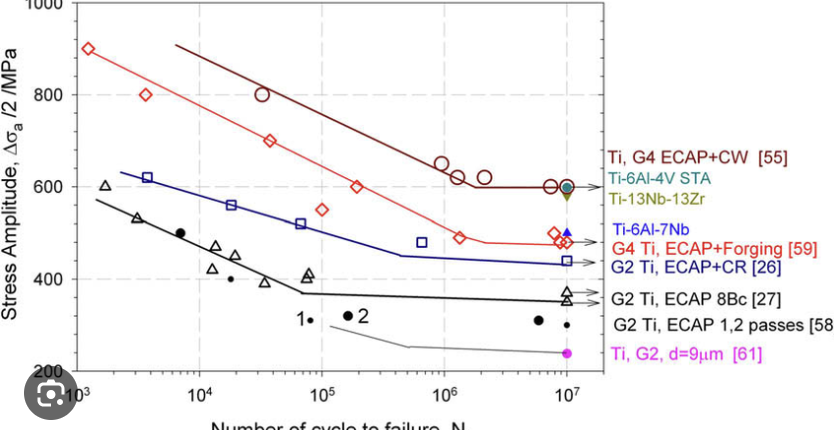
Titanium alloys, especially Grade 5 (Ti-6Al-4V), are widely used in aerospace, medical, and automotive industries for their high strength-to-weight ratio and corrosion resistance. However, their performance under cyclic loading—known as fatigue life—can be significantly improved through targeted heat treatment processes. This guide explains the metallurgical principles behind fatigue failure in titanium alloys, how common heat treatments modify their microstructure, and practical considerations for buyers sourcing heat-treated titanium components.
The Science of Fatigue in Titanium Alloys
Fatigue failure in titanium alloys occurs when repeated cyclic loads create micro-cracks at stress concentration points, which propagate over time until catastrophic failure. Several factors accelerate this process: residual stresses from machining, surface defects, inhomogeneous grain structures, and phase imbalances in the alloy.
In titanium alloys, the primary phases are hexagonal close-packed (HCP) α-phase and body-centered cubic (BCC) β-phase. The ratio, size, and distribution of these phases directly impact fatigue performance. A coarse or uneven phase structure creates internal stress points, while residual tensile stresses from forming or machining open the door for crack initiation. Heat treatment works by modifying these microstructural features to create a more uniform, stress-relieved material.
Key Heat Treatment Processes for Fatigue Improvement
The choice of heat treatment depends on the titanium alloy grade, component geometry, and performance requirements. Below are the most common processes and their effects on fatigue life:
Stress Relieving (Annealing)
Stress relieving is the first step for most machined or formed titanium components. The process involves heating the alloy to 500–650°C (below the β-transus temperature) and holding it for several hours before slow cooling. This relieves residual tensile stresses introduced during machining, welding, or forming. By eliminating these stress concentrations, stress relieving prevents early crack initiation, significantly improving high-cycle fatigue life. For parts that require dimensional stability, this treatment is often the only heat treatment needed.
Full Annealing
Full annealing involves heating the alloy above the recrystallization temperature (typically 700–800°C for Ti-6Al-4V) and holding it long enough to fully recrystallize the grain structure, followed by controlled cooling. This produces a uniform, fine-grained α+β microstructure. The fine, equiaxed grains improve both ductility and fatigue resistance by reducing the risk of crack propagation. Full annealing is commonly used for components that undergo heavy forming or require maximum toughness and fatigue performance.
Solution Treatment and Aging (Age Hardening)
For high-strength titanium alloys like Ti-6Al-4V, solution treatment and aging are used to increase strength while optimizing fatigue life. The process begins with heating the alloy to just below the β-transus temperature (around 950°C for Ti-6Al-4V) to dissolve α-phase into the β matrix, forming a homogeneous solid solution. Quenching the material locks in the high-temperature β-phase, and subsequent aging at 480–600°C precipitates fine, uniformly distributed α-phase particles within the β matrix.
This fine, needle-like α+β structure increases tensile strength and hardness. When properly controlled, it also improves fatigue life by creating barriers to crack propagation. However, over-aging can lead to coarse precipitates, which act as new stress raisers and reduce fatigue performance, making precise temperature control critical.
Post-Heat Treatment Surface Finishing for Maximum Fatigue Life
Heat treatment alone cannot eliminate surface-related fatigue issues. Post-processing steps are often required to fully unlock the material’s fatigue potential:
Shot Peening
Shot peening bombards the component surface with small, spherical media, introducing a uniform layer of compressive residual stress. This counteracts the tensile stresses that drive crack initiation, drastically improving fatigue life. When combined with stress relieving or annealing, shot peening creates a fatigue-resistant surface layer that is highly effective for parts subjected to cyclic loads.
Polishing and Chemical Milling
Removing surface defects, scratches, and machining marks through polishing or chemical milling eliminates potential crack initiation sites. Even minor surface irregularities can reduce fatigue life by 30–50%, so post-heat treatment finishing is essential for critical components.
Buyer’s Guide: Sourcing Heat-Treated Titanium Alloys
When sourcing heat-treated titanium components, verifying the process and material quality is critical to ensuring fatigue performance. Here are key considerations:
Confirm the Alloy Grade and Treatment Specification:
Specify the exact titanium grade (e.g., Ti-6Al-4V Grade 5) and the required heat treatment, including temperature ranges, hold times, and cooling rates. Reference industry standards such as AMS 4911 for solution-treated and aged Ti-6Al-4V to ensure compliance.
Request Process Documentation:
Reputable suppliers will provide heat treatment records, including furnace temperature logs, batch certifications, and material test reports (MTRs). These documents verify that the treatment was performed correctly and consistently.
Understand the Trade-Offs:
While solution treatment and aging increase strength, they can reduce ductility. For applications requiring high fatigue life at the expense of maximum strength, full annealing or stress relieving may be more appropriate. Discuss your application’s specific cyclic load requirements with your supplier to select the optimal treatment.
Inspect Surface Quality:
Even with proper heat treatment, poor surface quality will undermine fatigue performance. Ensure the supplier provides post-treatment finishing, such as shot peening or polishing, as specified in your drawings.
FAQ6 min read·2026-05-25
How to Improve Fatigue Life of Titanium Alloys Through Heat Treatment: A Technical Guide
Discover how heat treatment processes like annealing, solution treatment, and aging enhance the fatigue performance of titanium alloys, plus key buyer tips for sourcing heat-treated titanium components.