Introduction
The short answer is: No, titanium is not magnetic. It is a paramagnetic material, meaning it has very weak and non-permanent magnetic properties that are undetectable in everyday use. Unlike iron, nickel, or cobalt, titanium is not attracted to magnets, making it ideal for applications where magnetism is a concern.
This guide explains why titanium is non-magnetic, its key applications, and what buyers need to know when selecting materials for magnetic environments.
1. Why Titanium Is Non-Magnetic
Titanium’s atomic structure does not allow for permanent magnetic alignment:
Paramagnetism: When exposed to an external magnetic field, titanium atoms align weakly with the field, but this effect disappears once the field is removed.
No ferromagnetic properties: Unlike steel, titanium cannot be magnetized and does not retain any magnetic field.
Alloy considerations: Most common titanium alloys (like Ti-6Al-4V) remain non-magnetic, as the alloying elements do not introduce ferromagnetism.
2. Critical Applications of Non-Magnetic Titanium
This property makes titanium indispensable in several key industries:
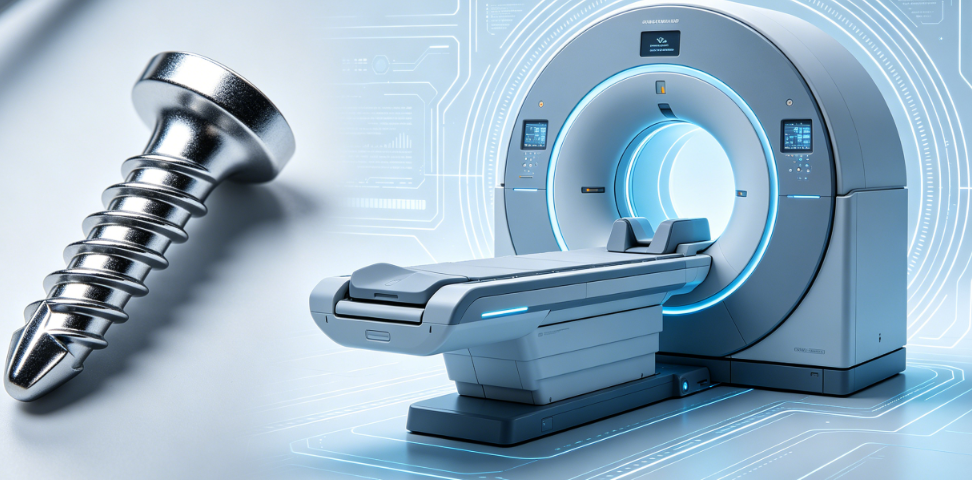
Medical and healthcare: Titanium implants (hip replacements, dental roots, pacemaker components) are safe for MRI scans, as they won’t be pulled by the strong magnetic field or cause imaging artifacts.
Electronics and telecommunications: Titanium is used in components near sensitive magnetic sensors, where even small magnetic interference could disrupt performance.
Marine and defense: Non-magnetic titanium hardware avoids triggering magnetic mines or interfering with shipboard navigation systems.
3. Common Misconceptions
Myth: All metals are magnetic: Many non-ferrous metals (aluminum, copper, titanium) are non-magnetic.
Myth: Titanium alloys are magnetic: Most titanium alloys remain non-magnetic. Magnetic properties only appear if contaminated with significant amounts of iron or steel during processing.
Myth: Titanium will interfere with compasses: Titanium’s paramagnetic effect is too weak to affect compasses or other magnetic navigation tools.
4. Buyer Considerations
If your application requires non-magnetic performance:
Choose pure or standard alloys: Commercially pure titanium (Grade 1-4) and Ti-6Al-4V are inherently non-magnetic.
Avoid contamination: Ensure the supplier’s manufacturing process prevents iron or steel contamination, which could introduce weak magnetic properties.
Test for magnetic properties: For critical applications, request a magnetic permeability test to confirm the material meets your requirements.
Conclusion
Titanium’s non-magnetic nature is one of its most valuable properties, making it irreplaceable in medical, electronic, and defense applications. For buyers, understanding this trait helps in selecting the right material for environments where magnetism is a concern.
FAQ5 min read·2026-06-12
Is Titanium Magnetic? Understanding Titanium’s Non-Magnetic Properties
A practical CNBJTI answer to "Is titanium magnetic?", exploring its non-magnetic nature and why it's ideal for MRI-safe applications. Includes buyer-focused notes on grade, processing, certification, and key RFQ details.