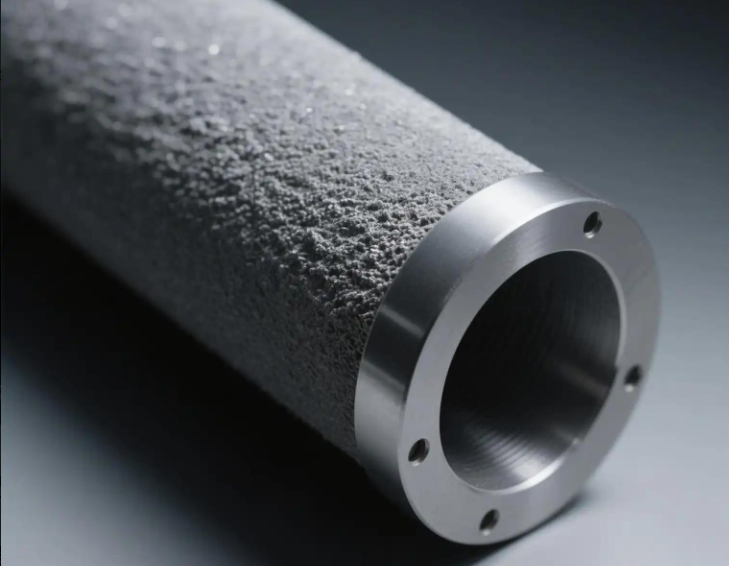
Sintered titanium filter cartridges are widely selected for critical industrial filtration where standard filter media cannot survive. Made by vacuum sintering high-purity titanium powder into a rigid porous structure, these titanium filter elements deliver unique strengths for corrosive, high-temperature, sterile and high-purity working conditions. Below are the main advantages of sintered titanium filters.
Superior Corrosion Resistance
Titanium automatically forms a stable, inert titanium dioxide passivation layer on its surface. It offers outstanding resistance to acids, alkalis, chlorine-containing media, ozone, hydrogen peroxide and saltwater.
Unlike 304 or 316L stainless steel, sintered titanium filters resist pitting and crevice corrosion in chloride-rich environments such as seawater, brine and ozone-treated water. This makes them ideal for chemical, desalination and wastewater filtration.
Reusable & Fully Regenerable
One of the biggest commercial advantages is reusability. The rigid titanium pore structure will not deform or collapse after cleaning.
When the pressure difference rises due to contaminant buildup, you can restore permeability by:
Air or liquid backwashing
CIP cleaning with acid or alkaline solution
Ultrasonic cleaning
Steam sterilization
Properly maintained titanium filters can run for years, greatly cutting down recurring filter replacement costs compared with disposable PP, PES and membrane filters.
High Temperature Resistance
Sintered titanium can handle continuous high-temperature liquid and gas filtration. It supports frequent SIP (steam-in-place) sterilization at 121℃ or higher, perfectly matching GMP requirements for pharmaceutical and food production.
It works reliably for hot process fluids, high-temperature flue gas and thermal chemical media where plastic filters will melt or degrade.
No Fiber Shedding, High Purity
Polymer filters carry risks of fiber shedding, particle migration and organic leaching.
Porous titanium is an integrated all-metal sintered body with no loose fibers. It avoids contamination risk for sterile pharmaceutical liquids, API solutions, ultra-pure water, semiconductor high-purity chemicals and food-grade materials. It will not release impurities into your process stream.
Excellent Mechanical Strength & Pressure Stability
The interconnected sintered titanium skeleton has high compressive strength. It withstands pressure spikes, frequent backflush cycles and cross-flow impact without bending, cracking or pore distortion.
This stability is critical for automated production lines with fluctuating flow and pressure.
Wide Available Pore Size Range
Sintered titanium filters support customizable pore grades from 0.22 μm sterilization grade up to 50 μm coarse filtration.
You can select the right specification for sterile filtration, fine particle removal, catalyst recovery, pre-filtration and dust removal for gas.
Good Biocompatibility & Sanitary Performance
Titanium is non-toxic and biocompatible. It meets sanitary standards for pharma, biotech and food & beverage industries. Repeated steam sterilization will not damage the filter or introduce toxic substances.
Limitations to Note
Sintered titanium filters have a higher initial purchase price than disposable filter cartridges. The best return on investment appears when you run harsh corrosive media, require repeated sterilization, or have continuous high-volume production. For simple low-corrosion clean water filtration, cheaper filter alternatives may be sufficient.
Summary
Sintered titanium filters are a premium filtration solution built for tough industrial conditions. Their corrosion resistance, cleanable regenerable structure, high-temperature performance and zero fiber shedding make them the preferred choice for pharma, chemical, new energy, seawater desalination, semiconductor and food filtration projects.
If you need custom-sized titanium filter cartridges with EN 10204 3.1 / 3.2 test certificates, send us your technical requirements for quotation.
Technical Guide5 min read·2026-11-04
Key Advantages of Sintered Titanium Filter Cartridges
Sintered titanium filters stand out from polymer and stainless steel filters for industrial filtration. Explore their core benefits including excellent corrosion resistance, high-temperature tolerance, regenerability, no fiber shedding, and long service life for harsh liquid and gas filtration.