Introduction
Biocompatibility is the top priority of raw material selection for medical implants and clinical equipment, and commercially pure titanium (Grade1 & Grade2) has rewritten modern medical manufacturing standards thanks to its unique biological safety and stable physical properties. From permanent human body implants to disposable surgical apparatus, pure titanium gradually replaces traditional stainless steel as mainstream medical metal material. This article explains core advantages of medical-grade pure titanium and its mainstream clinical application scenarios, matching CNBJTI medical titanium customized production and quality inspection specifications.
1. Unique Core Advantages for Medical Use
Excellent Human Body Biocompatibility
Pure titanium will not produce toxic metal precipitation or immune rejection after long-term implantation inside human tissue. Its surface native passivation film isolates body fluid corrosion, avoiding inflammation and tissue necrosis caused by metal ion dissolution, which is the core reason for its wide adoption in permanent implant production.
Outstanding Anti-Corrosion in Body Fluid Environment
Human blood, interstitial fluid and physiological saline belong to chloride-containing corrosive medium. Conventional steel and common alloy corrode gradually in such environment, while pure titanium keeps stable structure permanently under long-term soaking in body fluid, securing long service life of implanted parts.
Moderate Mechanical & Forming Performance
Grade2 medical pure titanium balances ductility and tensile strength, convenient for precision CNC machining, bending and fine polishing, suitable for producing complex-shaped customized implant accessories and tiny surgical components.
2. Typical Medical Application Fields
Orthopedic Implant Products
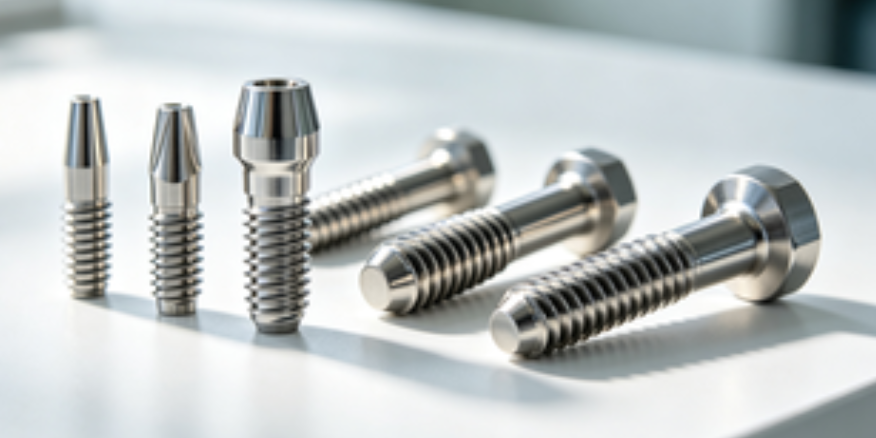
Pure titanium plates, bone screws and artificial joint base components are widely used in fracture fixation and orthopedic repair surgery. These implanted fixtures stay inside human body for decades without rust or failure, greatly improving postoperative recovery effect for patients.
Dental Restoration Parts
Dental titanium posts, implant fixtures and crown bases adopt medical-grade pure titanium. Its good osseointegration ability enables tight combination between implant and alveolar bone, becoming mainstream solution for permanent tooth repair.
Surgical & Medical Equipment
Disposable surgical scalpel components, medical instrument clamping parts and medical pipeline fittings are processed from pure titanium material. Its lightweight feature reduces fatigue during long-time operation for surgeons, and corrosion resistance supports repeated high-temperature disinfection sterilization.
3. Medical Industry Procurement Key Tips
Medical pure titanium implements stricter impurity control than general industrial titanium, following ASTM F67 dedicated medical material standard. When purchasing, ask suppliers to provide complete medical-grade MTC test report including biocompatibility inspection data, to pass medical device factory incoming quality audit.
Conclusion
Superior biological safety and environmental adaptability make commercially pure titanium an irreplaceable foundational material of modern medical industry. Mastering medical-grade titanium feature and procurement specification helps medical device manufacturers select matched raw material and guarantee finished product clinical safety.
Applications5 min read·2026-06-03
The Medical Revolution Fueled by Commercially Pure Titanium: Core Applications in Healthcare Industry
Explore how medical-grade commercially pure titanium drives modern healthcare development, including biocompatibility features, implant fabrication, medical device selection standard and procurement certification notes for medical industry buyers.