1. Introduction
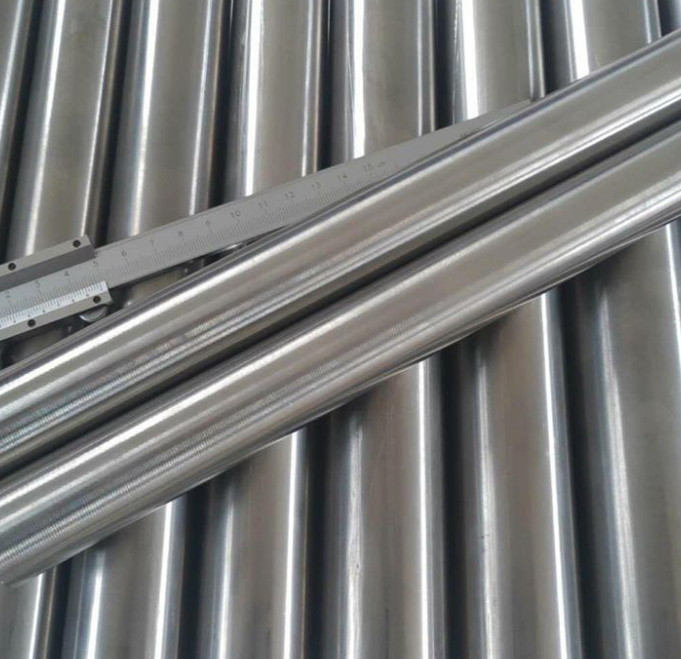
China has emerged as a global leader in titanium production, with a complete industrial chain spanning from sponge titanium to finished products like bars, rods, and wires. These semi-finished products are the backbone of applications in aerospace, medical devices, 3C electronics, and chemical processing. This guide provides an in-depth look at the manufacturing process, quality control standards, and key considerations for buyers sourcing titanium bars, rods, and wires from Chinese suppliers.
2. Core Manufacturing Process
2.1 Raw Material Preparation
The process begins with high-quality sponge titanium (Grade 1-5) or recycled titanium scrap, which is then compacted and melted into ingots via vacuum arc remelting (VAR) or electron beam melting (EBM).
2.2 Hot Working & Forging
Titanium ingots are heated to 900–1100°C and forged or rolled into billets, improving the material’s grain structure and mechanical properties. This step is critical for ensuring uniform strength and ductility in the final product.
2.3 Piercing & Extrusion
For seamless bars and rods, piercing is used to create hollow billets, which are then extruded into semi-finished profiles. For solid bars, continuous casting or hot rolling is employed to reduce the cross-section to near-net shape.
2.4 Cold Drawing & Sizing
Titanium rods and wires undergo cold drawing to achieve precise diameters and smooth surface finishes. Multiple passes through dies reduce the material to the required size, while intermediate annealing relieves work hardening.
2.5 Finishing & Inspection
The final steps include straightening, cutting to length, surface treatment (polishing, pickling), and non-destructive testing (NDT) to detect internal defects.
3. Key Quality Control Standards
Buyers should verify compliance with these critical standards:
Chemical Composition: Must meet ASTM B348 (bars/rods) and ASTM B863 (wires) for purity and alloying elements.
Mechanical Properties: Tensile strength, yield strength, and elongation must align with grade-specific requirements (e.g., Grade 5: 900 MPa tensile strength).
Dimensional Tolerance: Diameter tolerance (±0.01–0.1mm) and straightness must match application needs (medical vs. industrial).
Surface Quality: No cracks, pits, or scale; pickled or polished finish as specified.
4. Key Information to Prepare for RFQs
When sourcing from Chinese titanium mills, provide clear specifications to avoid delays:
Grade & Standard: Specify ASTM/ISO grade (e.g., Grade 2, Grade 5) and applicable standards (B348, B863).
Dimensions: Exact diameter, length, and tolerance requirements.
Surface Finish: Pickled, polished, or centerless ground.
Quantity & Delivery: Annual volume, lead time, and packaging requirements.
Testing Requirements: MTR, third-party inspection, or NDT reports.
5. Conclusion
China’s titanium industry offers a full range of high-quality bars, rods, and wires at competitive prices. By understanding the manufacturing process, verifying quality standards, and providing clear RFQ specifications, buyers can confidently source reliable titanium materials for their projects.
Processing Guide5 min read·2026-05-27
The Rise of China's Titanium Industry: A Complete Processing Guide for Titanium Bars, Rods and Wires
A comprehensive processing guide for titanium bars, rods, and wires, covering manufacturing processes, quality control standards, and critical information buyers should prepare when submitting RFQs to Chinese titanium suppliers.