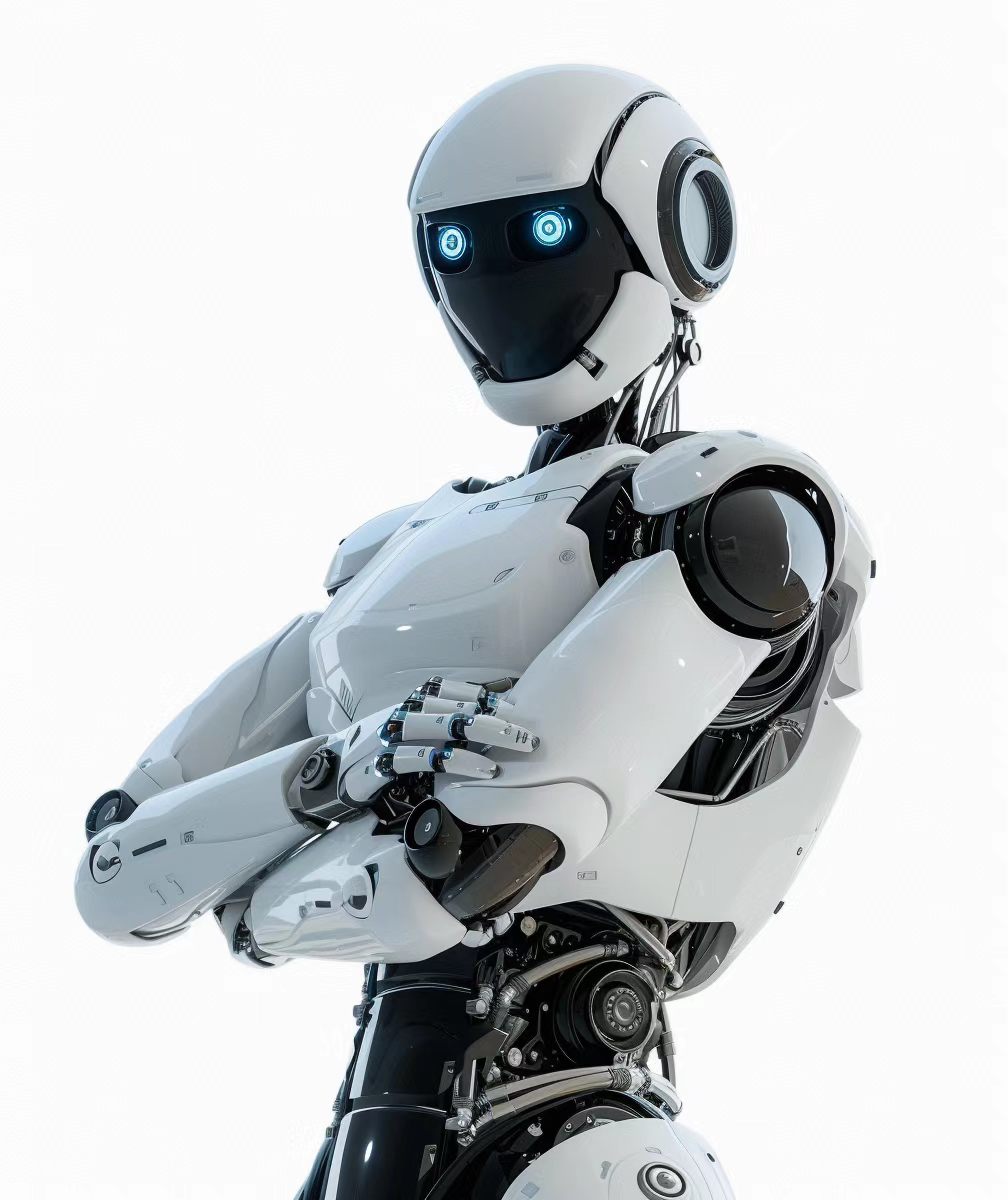
The global humanoid robot industry is experiencing rapid growth. Driven by service scenarios, industrial handling and commercial display demands, robot developers continuously pursue lighter weight, higher flexibility and longer continuous working time. Structural material selection has become a core bottleneck restricting performance upgrading. Against this background, titanium alloys are gaining growing attention, and possess broad application prospects in humanoid robot manufacturing.
Core Drivers Boosting Titanium Alloy Adoption
1. Lightweight requirement becomes an industry consensus
Battery life is one of the biggest pain points for humanoid robots. Every kilogram of weight increase will raise energy consumption and shorten endurance. Titanium alloy features an excellent strength-to-weight ratio, nearly 40% lighter than steel and higher specific strength than ordinary aluminum alloy. Replacing traditional metal materials with titanium can effectively reduce dead load, lower motor power loss and improve robot motion efficiency. As lightweight design turns into standard configuration for high-end humanoid robots, market demand for titanium structural parts will keep rising.
2. Long-cycle operation puts forward higher fatigue resistance requirements
Humanoid robots need to complete repeated walking, arm swinging and posture adjustment all day long. Aluminum alloy is prone to fatigue cracking under frequent cyclic movement, while titanium alloy has outstanding fatigue resistance. For joint brackets, limb connecting frames and load-bearing skeletons, titanium can maintain long-term structural stability and reduce maintenance frequency, which matches the commercial operation demands of mass-produced humanoid robots.
3. Diversified application scenarios demand reliable environmental adaptability
Humanoid robots will be deployed in family service, commercial reception, factory workshops and even outdoor scenarios. Titanium naturally forms an anti-corrosion passivation film, resisting moisture, sweat and atmospheric corrosion. Besides, titanium is non-magnetic and will not interfere with internal sensors, inertial modules and visual equipment. These characteristics enable humanoid robots to work stably in complex environments.
4. 3D printing technology reduces the processing threshold of complex titanium structures
Many lightweight robot skeletons adopt hollow lattice structures, which are difficult to produce via traditional cutting processing. SLM metal 3D printing can directly form complex Ti-6Al-4V components. With the popularization of additive manufacturing equipment, the production cost of customized titanium robot parts is gradually declining, greatly expanding the application space of titanium alloys in prototype research and small-batch trial production.
Existing Limitations Restricting Large-Scale Popularization
Despite obvious performance advantages, titanium alloys still face barriers to wide-scale application at the current stage.
First of all, raw material and processing costs are higher than aluminum alloy, which increases the overall manufacturing cost of robots and brings pressure to mass-produced low-and medium-end humanoid robot products.
Secondly, titanium has poor cutting performance. CNC machining consumes more tools and takes longer processing time, further lifting component costs.
In addition, the industry lacks unified material standards and process specifications for robot titanium parts. Most solutions are customized for each robot project.
Future Market Prospect Judgment
In the short term, titanium alloys will be mainly used in high-end prototype machines, flagship commercial humanoid robots and research and development platforms. Manufacturers prioritize performance over cost, and are willing to adopt titanium for core load-bearing structures such as joint frames and main skeletons.
In the medium and long term, with the expansion of titanium material output, optimized processing technology and mature metal 3D printing industry chain, the comprehensive cost of titanium components will gradually decrease. Titanium alloys are expected to realize large-scale application in mid-to-high-end mass-produced humanoid robots.
Looking further ahead, as humanoid robots move toward universal commercialization, higher requirements on motion ability and service life will continue to emerge. As a balanced lightweight high-strength material, titanium alloy will occupy an irreplaceable position in the material system of next-generation humanoid robots.
Conclusion
Titanium alloys have remarkable comprehensive performance advantages to satisfy the upgrading demands of humanoid robots. Although cost and processing challenges remain for massive popularization at present, the application prospect is positive. With the continuous development of the robotics industry and progress in titanium processing technology, titanium materials will become a key structural choice for more humanoid robot developers.
Technical Guide5 min read·2026-07-22
What Is The Application Prospect of Titanium Alloys in Humanoid Robot Industry
Explore the application prospect of titanium alloys for humanoid robots. Learn core driving factors, existing limitations, short-term and long-term market trends of titanium structural parts in the humanoid robotics industry.