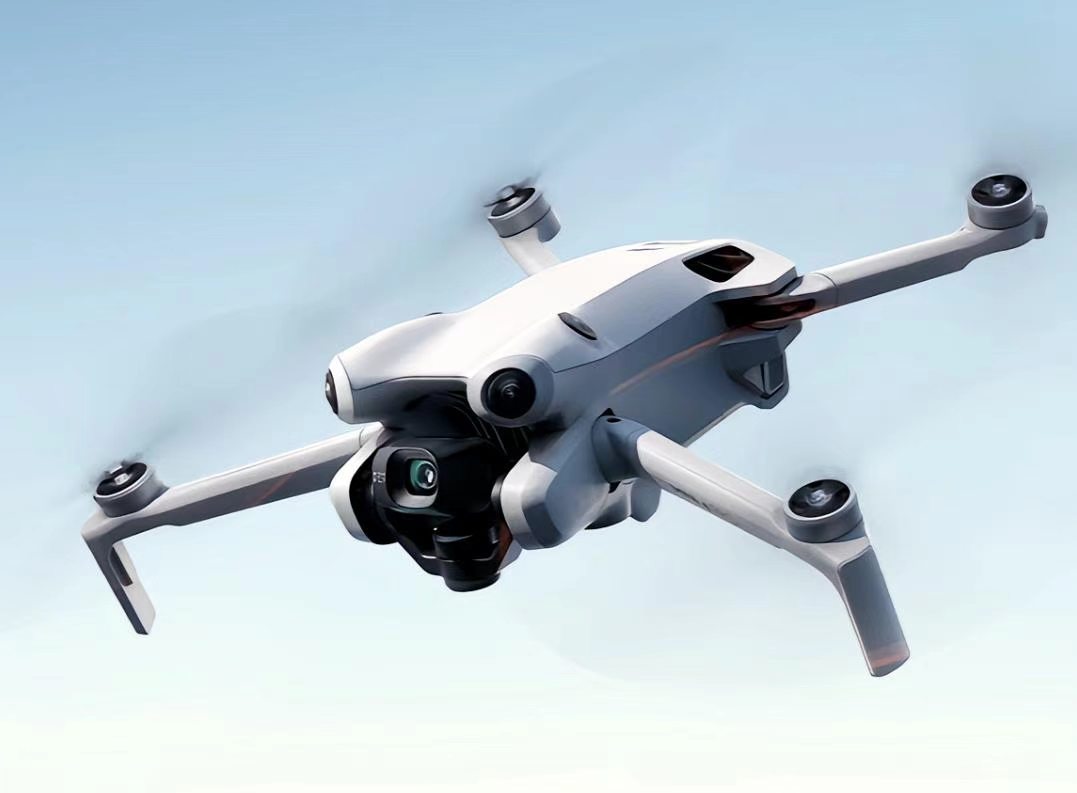
The global unmanned aerial vehicle (UAV / drone) industry continues to expand rapidly, covering commercial surveying, marine inspection, emergency rescue, military surveillance and high-altitude exploration. As operators pursue longer flight endurance, stronger payload capacity and reliable operation under extreme environments, lightweight high-performance structural materials become a key factor for drone performance upgrading. Titanium alloys have gradually become a preferred material solution for high-end and special-purpose drones.
Compared with conventional aluminum alloy, carbon fiber composite and steel, titanium provides a balanced combination of high specific strength, excellent fatigue resistance, thermal stability and corrosion resistance. While general consumer drones mostly adopt low-cost aluminum or composite materials, titanium shows irreplaceable value for industrial, marine, high-altitude and defense-grade UAVs.
Core Advantages of Titanium Alloys for Drones
1. High Strength-to-Weight Ratio for Lightweight Design
Titanium alloy is roughly 40% lighter than steel with comparable tensile strength. Using titanium on load-bearing structures effectively reduces the empty weight of UAVs. Lower body weight reduces power consumption of motors and batteries, extends flight duration and improves available payload capacity, which is critical for long-endurance surveillance drones.
2. Outstanding Vibration & Fatigue Resistance
Drones work under continuous propeller vibration, frequent takeoff, landing and attitude adjustment. Aluminum alloy easily suffers fatigue cracking under long-cycle vibration; carbon fiber is brittle against impact. Titanium alloys maintain stable mechanical performance under cyclic vibration and shock loads, greatly extending the service life of airframe brackets and landing gear.
3. Superior Corrosion Resistance for Harsh Environment
Many industrial UAVs operate along coastlines, offshore platforms or humid salt-fog environments. Titanium spontaneously forms a dense passive oxide film, resisting seawater, moisture and atmospheric corrosion. Marine inspection drones made of titanium require far less maintenance and avoid rust failure during long-term maritime missions.
4. High Temperature Resistance for Propulsion Components
Fuel-powered UAV engines and exhaust systems generate sustained high heat. Titanium can maintain stable mechanical properties at temperatures up to 550–600°C, suitable for engine parts, exhaust manifolds and heat shielding components that cannot be supported by aluminum alloys.
5. Non-magnetic Property
Titanium is completely non-magnetic and will not interfere with inertial navigation modules, GPS sensors and magnetometers equipped on UAVs, avoiding navigation signal deviation during flight.
Main Titanium Grades Used in UAV Manufacturing
Grade 5 Ti-6Al-4V Titanium Alloy
The most widely used aerospace titanium alloy for drone production. It balances strength, lightweight performance and machinability. Suitable for airframe frames, landing gear, joint brackets, fasteners and rotor connecting structures of most medium and high-end UAVs.
Grade 23 Ti-6Al-4V ELI
Low-interstitial high-toughness variant of Ti-6Al-4V. It delivers enhanced fatigue performance, selected for critical flight hardware on long-endurance surveillance drones and defense UAVs.
Grade 2 Pure Titanium
Good ductility and corrosion resistance. It is mainly used for non-load-bearing shells, pipeline components and auxiliary parts of marine inspection drones.
High-temperature Titanium Alloys (Ti-6242)
For turbojet engine components of high-speed UAVs requiring sustained high-temperature operation.
Typical Drone Components Made of Titanium Alloy
Main airframe load-bearing frames and arm connection brackets
Lightweight landing gear and shock absorption structural parts
Rotor mounts, hinge assemblies and transmission supports
Engine casings, exhaust pipes and high-temperature heat shields
Precision fasteners, connecting shafts and fixture hardware
Complex lightweight structural parts manufactured via SLM metal 3D printing
Corrosion-resistant structural parts for offshore marine UAVs
Common Manufacturing Processes
CNC Precision Machining
Used for high-tolerance landing gear, joint brackets and standard structural fittings, ensuring stable assembly accuracy.
SLM Metal 3D Printing
Enables topology optimized hollow and lattice structures to maximize weight reduction. Ideal for drone prototype development and customized small-batch UAV components.
Sheet Forming & Welding
Applied for thin titanium shells, protective covers and airframe panel components.
Market Prospects & Existing Challenges
At present, titanium alloys are not widely used in mass-produced consumer drones due to higher raw material and processing costs compared with aluminum. However, demand keeps growing in segmented tracks: marine patrol UAVs, high-altitude exploration drones, emergency rescue platforms and military surveillance UAVs.
With the continuous maturity of metal additive manufacturing technology and the expansion of titanium material supply chain, the comprehensive cost of titanium drone parts will gradually decline. In the medium and long term, titanium alloys will occupy an important position in high-performance industrial UAV material systems.
Conclusion
Titanium alloys possess unique comprehensive performance to meet the demand of UAVs working in extreme environments with long endurance requirements. Although cost barriers limit large-scale application in low-end consumer drones, titanium will remain an irreplaceable lightweight material for high-end industrial, marine and defense unmanned aerial vehicles as the low-altitude economy and UAV technology develop.
We supply Grade 2 pure titanium, Grade 5 Ti-6Al-4V and Grade 23 ELI titanium raw materials, and provide customized CNC machining and 3D printing services for global UAV research institutions and drone manufacturers.
Technical Guide5 min read·2026-07-22
Titanium Alloys for UAV & Drone Manufacturing: Advantages, Grades & Applications
Discover the applications of titanium alloys in UAV and drone industry. Learn material strengths, suitable titanium grades, typical drone components, manufacturing processes and market prospects for surveillance, industrial and marine unmanned aerial vehicles.