Introduction
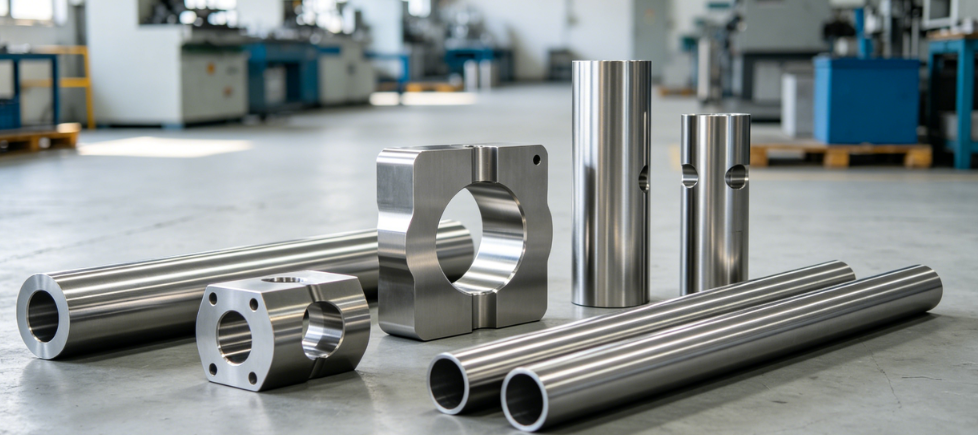
As modern industrial manufacturing keeps raising standards for lightweight and long-service-life structural materials, titanium alloys gradually become indispensable raw materials across chemical, marine, machinery and energy industries. Different from commercially pure titanium, alloyed titanium adds aluminum, vanadium and other elements to boost mechanical strength while retaining excellent natural anti-corrosion performance, realizing the dual advantage of high load capacity and medium erosion resistance. This article elaborates core strengths of mainstream titanium alloys and their practical industrial application rules, matching CNBJTI’s customized titanium component production and procurement specifications.
1. Core Competitive Advantages of Industrial Titanium Alloys
High Strength-to-Weight Ratio
Typical Grade5 Ti-6Al-4V titanium alloy reaches tensile strength close to medium carbon steel, while its density is only roughly 60% of steel. Replacing steel parts with titanium alloy effectively cuts equipment dead load, lowering overall transportation and operating consumption for finished industrial machinery.
Outstanding Comprehensive Corrosion Resistance
Titanium alloy retains the native self-repair passivation film feature of pure titanium, staying stable in seawater, dilute acid and alkaline working medium. It avoids pitting and crevice corrosion that frequently troubles stainless steel, adapting to long-cycle service in harsh chemical and coastal industrial environments.
Stable High-Temperature Mechanical Performance
Within medium-high temperature working range, titanium alloy hardly generates thermal creep deformation compared with aluminum alloy, so it is widely used for high-temperature peripheral components of energy equipment and industrial heat exchange devices.
2. Mainstream Industrial Application Fields
Chemical & Petrochemical Equipment
Custom titanium alloy flanges, pump shells and reaction equipment brackets are commonly applied in acid and salt-containing chemical production lines. Its anti-corrosion trait prevents medium leakage and metal ion contamination, extending equipment maintenance cycle greatly.
Marine & Desalination Industry
Titanium alloy fasteners, pipeline joints and heat exchanger accessories serve offshore platforms and seawater desalination plants, resisting continuous erosion from saltwater and coastal salt fog without regular anti-rust coating maintenance.
General Mechanical & New Energy Manufacturing
For wind power equipment connecting parts and hydraulic system structural fittings, customized titanium alloy components balance load-bearing demand and anti-environmental-erosion capacity, becoming preferred alternative material for high-end machinery upgrading.
3. Buyer’s Customized Production & Procurement Tips
Grade Matching Standard
For most conventional industrial projects, Ti-6Al-4V (Grade5) is the universal cost-effective option; for ultra-high-temperature or special corrosive working conditions, turn to high-temperature resistant titanium alloy grades according to medium test data.
Fabrication Control Note
Custom titanium parts require professional CNC machining and inert gas shielded welding to avoid surface oxidation defects. Confirm processing craft with manufacturers before issuing RFQ.
Documentation Requirement
Ask suppliers to provide complete MTC material test certificate covering chemical composition, mechanical property and flaw detection reports to satisfy factory incoming quality inspection standards.
Conclusion
The perfect combination of high specific strength and corrosion resistance pushes titanium alloys to expand application boundaries in diversified heavy industries. Clarifying application scenarios and customized production standards helps industrial purchasers pick proper alloy solutions and control comprehensive project cost reasonably.
Applications5 min read·2026-06-03
Titanium Alloys in Industrial Applications: How High Strength & Corrosion Resistance Drive Modern Manufacturing
Detailed guide for industrial buyers on custom titanium alloy parts, including grade selection rules, corrosion performance, precision fabrication processes and official certification documentation for real-world industrial projects.