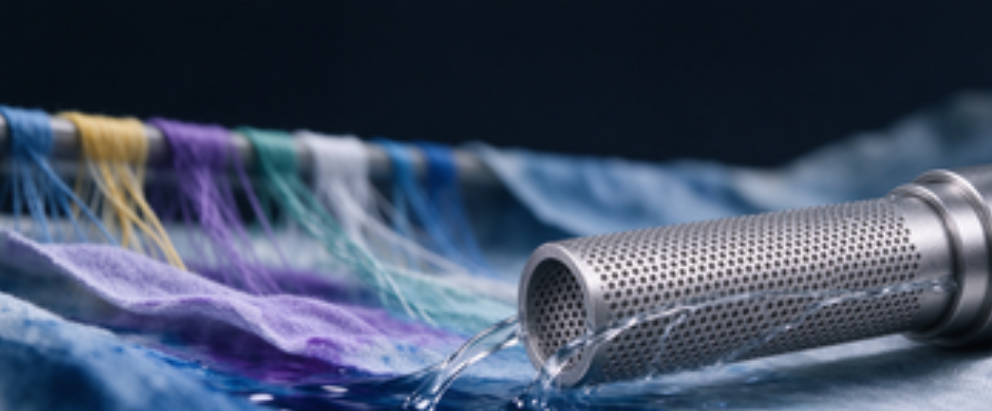
Titanium materials are widely adopted across the textile industry, covering production wastewater treatment, dye & spinning liquid filtration, functional finishing of fabrics, polyester polymerization catalysts, and corrosion-resistant textile machinery components. Sintered titanium filter cartridges are one of the most practical titanium products for textile dyehouses and spinning mills.
1. Dyeing & Printing Wastewater Filtration (Core application for your titanium filter business)
Textile dyeing wastewater contains dyes, auxiliaries, suspended solids, chloride and acidic/alkaline substances. It is highly corrosive and hard for ordinary PP or stainless steel filters to handle long-term.
Sintered titanium filters are used for:
Pre-filtration and fine filtration of dye liquor, printing paste and washing water
Removal of pigment sludge, floating fibers and fine suspended particles
Recycling of reusable dye and auxiliary liquid to cut raw material cost
Ozone advanced oxidation treatment of textile wastewater
Titanium’s excellent chlorine and acid-alkali resistance avoids pitting corrosion. Filters can be backwashed, CIP cleaned and reused repeatedly, which lowers the running cost for continuous dyeing lines.
2. Titanium-Based Catalyst for Polyester Fiber (PET / FDY / POY)
Titanium catalysts replace traditional antimony catalysts for polyester polymerization, producing antimony-free eco-friendly polyester chips and filaments.
This is a fast-growing segment for green textile production. The titanium catalyst helps control melt color and stability during melt direct spinning, meeting the global low-toxicity and environmental requirements for apparel and home textile fibers国家先进功....
3. Nano TiO₂ Functional Finishing for Fabrics
Nano titanium dioxide is the most common titanium compound in functional textiles. It is coated or blended into fibers to add multiple performance:
UV protection: Absorb and scatter UV rays, reach UPF50+ for outdoor garments, sun-protective fabrics and tents
Photocatalytic self-cleaning: Break down oil stains and organic dirt under light
Antibacterial & deodorant: Suppress bacteria and mold for sportswear, medical textiles, bedding and socks
Anti-aging protection: Protect high-performance fibers from UV degradation for long service life
4. Corrosion-Resistant Textile Machinery Spare Parts
Titanium alloy parts are used in dyeing jiggers, overflow dyeing machines, padder rollers and nozzle assemblies.
In hot acidic, chlorine-containing dye baths, titanium outlasts 304/316L stainless steel. It resists rust, scale buildup and chemical corrosion, reducing downtime and part replacement frequency.
5. Special Advanced Titanium Textiles
Ultra-fine titanium microfilaments can be woven or warp-knitted into flexible titanium mesh and tubular structures. These high-value special textiles are mainly used in medical textile implants, electromagnetic shielding fabrics and wearable smart textile electrodes, not ordinary clothing fabrics.
6. Melt & Slurry Filtration for Spinning
Sintered titanium filter elements are used for filtration of high-temperature polymer melt, spinning slurry and viscose fluid. They remove hard impurities and carbon particles to prevent spinneret clogging, improve yarn quality and reduce broken ends during spinning.
Key Advantages of Titanium for Textile Workflows
Resist acid, alkali, chlorine and ozone, matching harsh dye bath conditions
Sintered titanium filters are regenerable via backflush, CIP and ultrasonic cleaning
No fiber shedding, avoid secondary contamination of dye liquor and yarn
High temperature tolerance, suitable for hot dyeing and high-temperature spinning fluid
TiO₂ functional finishing is non-toxic, skin-friendly and compliant with textile safety standards
Summary
For textile manufacturers, titanium brings two major values: sintered titanium filters for dye liquor and wastewater purification, and titanium additives/catalysts for eco-friendly, functional fabrics.
If you are sourcing sintered titanium filter cartridges for dyehouses, we can provide custom pore sizes, lengths and material certificates such as EN 10204 3.1 / 3.2.
Technical Guide5 min read·2026-11-04
Titanium Applications in the Textile Industry
Titanium and sintered titanium filters serve multiple key roles in textile manufacturing, including dyeing wastewater filtration, functional fabric modification, titanium-based polyester catalysts, and corrosion-resistant textile machine parts. Explore the full industrial applications here.