Introduction
In industrial and commercial applications, protecting components from wear, corrosion, and high temperatures is critical to extending service life and maintaining performance. Titanium-based coatings have emerged as a powerful solution, offering a unique combination of hardness, chemical resistance, and biocompatibility.
This guide explores how titanium coatings work, their key benefits, common application methods, and the industries they transform, based on industrial specifications from CNBJTI.
What Are Titanium Coatings?
Titanium coatings are thin layers of titanium or titanium-based compounds applied to the surface of other materials. These coatings leverage titanium’s inherent properties to improve the performance of the base material without the high cost of using solid titanium.
They are not just a simple paint or layer; they form a strong, metallurgical bond with the substrate, creating a protective barrier that can withstand extreme conditions.
Core Benefits of Titanium Coatings
The advantages of titanium coatings make them invaluable in demanding environments.
First, exceptional corrosion resistance. Titanium forms a stable, passive oxide layer that prevents chemical reactions. Coatings made of pure titanium or titanium alloys protect underlying metals from rust, acids, and saltwater, making them ideal for marine and chemical processing equipment.
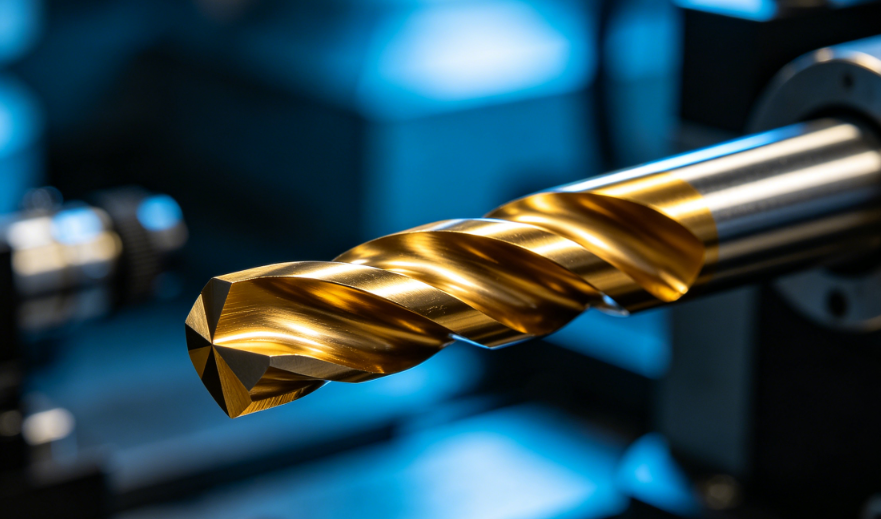
Second, enhanced hardness and wear resistance. Titanium nitride (TiN) and titanium carbonitride (TiCN) coatings are extremely hard, far harder than most steels. This makes them perfect for cutting tools, drills, and industrial components that experience high friction and wear. A TiN coating can double or triple the lifespan of a tool.
Third, high-temperature stability. Titanium coatings can withstand extreme heat without degrading, making them suitable for engine components, aerospace parts, and industrial furnaces.
Fourth, biocompatibility. Titanium is non-toxic and non-reactive with the human body. Coatings on medical implants, surgical instruments, and dental devices improve biocompatibility and reduce the risk of rejection.
Common Application Methods
There are several industrial processes for applying titanium coatings, each suited to different needs.
Physical Vapor Deposition (PVD) is the most common method. In a high-vacuum chamber, solid titanium is vaporized and deposited onto the part’s surface. PVD coatings are thin, uniform, and extremely adherent. They are widely used for tool coatings, jewelry, and decorative hardware.
Chemical Vapor Deposition (CVD) involves reacting titanium compounds with the part’s surface at high temperatures to form a coating. CVD coatings are typically thicker and denser than PVD coatings, making them ideal for high-wear applications.
Electroplating is not possible with pure titanium, but titanium-based compounds can be applied using specialized processes. Most functional titanium coatings rely on PVD or CVD technology.
Key Applications
Titanium coatings are used across a wide range of industries:
Cutting Tools and Machining: TiN and TiAlN coatings on drills, end mills, and saw blades improve hardness and heat resistance.
Medical Devices: Coatings on orthopedic implants, pacemakers, and surgical tools enhance biocompatibility and corrosion resistance.
Aerospace and Automotive: Heat-resistant coatings on engine parts, turbine blades, and exhaust components improve performance and longevity.
Decorative Hardware: Gold-colored TiN coatings on jewelry, watches, and bathroom fixtures offer a durable, scratch-resistant finish.
Buyer and Processing Considerations
When specifying a titanium coating, it’s important to consider:
The type of coating material (pure titanium, TiN, TiCN, etc.) based on your performance needs.
The coating thickness and adhesion strength, which are critical for durability.
The application method and its impact on the part’s dimensions, as some processes can cause dimensional changes.
Conclusion
Titanium coatings are a versatile, high-performance solution for enhancing the durability and performance of components across industries. By leveraging titanium’s unique properties, these coatings provide exceptional corrosion resistance, hardness, and biocompatibility, extending the life of parts and reducing maintenance costs.
Processing Guide5 min read·2026-06-08
Titanium Coatings: Enhancing Durability, Performance & Corrosion Resistance
A CNBJTI processing guide to titanium coatings, exploring their benefits, common application methods like PVD, performance advantages in industrial environments, and key procurement tips for buyers.