Introduction
Titanium is known for its high strength, corrosion resistance, and lightweight properties. However, one of its most visually interesting characteristics is its ability to develop different colors when heated or anodized. These colors are not caused by pigments or coatings alone; they result from the formation of a thin titanium oxide layer on the surface.
When titanium is exposed to different temperatures, the thickness and structure of the oxide layer can change, leading to different visual colors. This effect has applications in material identification, jewelry, industrial components, consumer products, and high-temperature equipment.
1. Why Titanium Changes Color with Temperature
Titanium has a strong affinity for oxygen. When heated in air or oxygen-containing environments, it forms a titanium dioxide layer on its surface. This layer is thin, transparent, and capable of interfering with light.
The color we see depends on several factors:
Temperature level: Higher temperatures can increase oxide layer thickness.
Heating duration: Longer exposure may allow the oxide layer to grow more fully.
Oxygen availability: The amount of oxygen present affects oxidation behavior.
Titanium grade: Alloying elements can influence surface oxidation and color development.
Surface condition: Cleanliness, texture, and previous treatment can also affect the final appearance.
Because of these variables, titanium can appear silver, gold, blue, purple, brown, gray, or black under different heating and processing conditions.
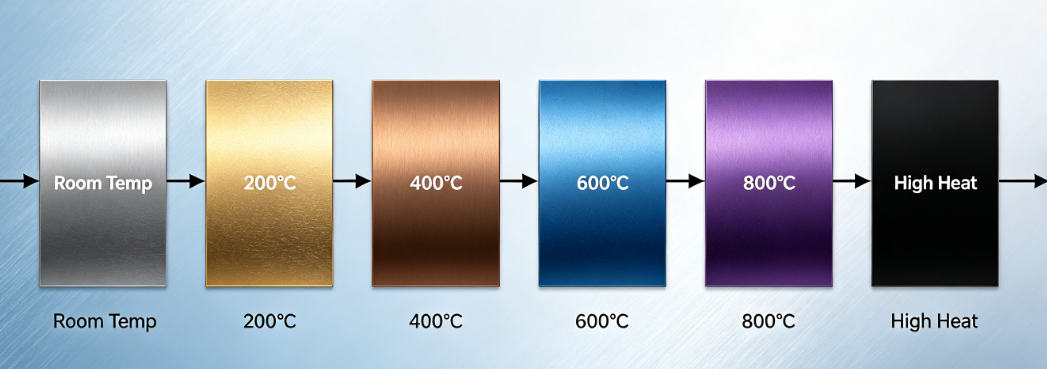
2. Titanium Color Approximations at Different Temperatures
It is important to note that exact color results depend on heating time, surface preparation, and alloy composition. However, certain general color trends can be observed.
Room Temperature
At room temperature, titanium typically maintains a natural silver-gray metallic appearance. The surface may already contain a very thin oxide layer, but it is usually not thick enough to produce strong color effects.
Around 200°C to 400°C
At relatively low heating temperatures, titanium may begin to show subtle warm tones, light yellow, or pale gold colors. These colors are often faint and can be influenced by surface finish and heating time.
Around 400°C to 600°C
As temperature increases, titanium may develop more noticeable gold, brown, or bronze colors. These colors are sometimes used in decorative titanium products and jewelry.
Around 600°C to 800°C
In this range, titanium can form deeper brown, gray, and near-black colors. The oxide layer becomes thicker and more visible, giving the surface a darker, more mature appearance.
Above 800°C
At very high temperatures, titanium oxidation becomes more aggressive. The surface may form thick gray, black, or scale-like oxide layers. In industrial applications, this level of oxidation is often associated with high-temperature processing, heat treatment, or extreme operating conditions.
3. Color Formation Mechanism: Oxide Layer and Light Interference
The colors seen on heated titanium are mainly due to light interference caused by the thin oxide layer. When light hits the titanium surface, part of the light reflects from the top of the oxide layer, and part reflects from the metal surface beneath it. These reflected light waves can interfere with each other, creating different color perceptions.
This is why titanium colors often appear iridescent, metallic, and sensitive to viewing angle. The same titanium surface may look slightly different under various lighting conditions.
4. Factors That Affect Titanium Color Development
Surface Preparation
A clean, uniform surface is important for consistent color formation. Oil, grease, fingerprints, and contaminants can cause uneven oxidation and irregular color patterns.
Heating Method
Titanium can be heated using furnaces, torches, lasers, or electrical resistance heating. Each method can produce different temperature distributions and color results.
Cooling Rate
Cooling rate can also affect the final appearance. Slow cooling and rapid cooling may result in different oxide layer structures and color intensities.
Titanium Grade
Commercially pure titanium and titanium alloys may behave differently under heat. Alloying elements can change oxidation resistance, layer growth rate, and final color.
Environment
Heating in air, oxygen, inert gas, or vacuum will produce different results. Oxygen availability is particularly important for oxide layer formation.
5. Applications of Colored Titanium
Jewelry and Luxury Products
Colored titanium is used in rings, bracelets, watches, and eyewear. Its lightweight strength and unique metallic colors make it attractive for modern accessories.
Industrial Design
Titanium’s color range allows designers to create distinctive product surfaces without additional coatings. This is useful for consumer electronics, sporting goods, and high-end equipment.
High-Temperature Equipment
In some industrial applications, titanium color changes can indicate exposure to high temperatures. Operators may use color observation as a simple indicator of thermal history.
Material Identification
Under controlled conditions, color appearance can help differentiate titanium from other metals. However, this method should be used carefully and confirmed with more reliable testing methods.
Anodized Titanium Products
Anodizing is another common method used to create controlled colors on titanium. It allows manufacturers to produce more consistent blue, gold, purple, and black finishes for commercial products.
6. Safety and Processing Considerations
When heating titanium, it is important to control temperature, time, and environment. Titanium can react with oxygen at high temperatures, and fine titanium particles may present certain hazards under improper conditions.
For industrial processing, manufacturers should:
Use appropriate heating equipment.
Control oxygen exposure.
Follow material safety data sheets.
Ensure proper ventilation.
Avoid uncontrolled high-temperature heating.
Verify material grade before processing.
Conclusion
Titanium develops different colors at different temperatures mainly due to the formation and growth of titanium oxide layers. From subtle silver and gold tones to deeper brown, gray, and black colors, temperature has a significant influence on titanium’s final appearance.
This color-changing property makes titanium interesting for jewelry, industrial design, consumer products, and high-temperature applications. However, achieving consistent results requires careful control of temperature, time, surface condition, and titanium grade.
Technical Guide5 min read·2026-06-17
Titanium Color at Different Temperatures: Oxidation Colors and Applications
Titanium develops different colors at different temperatures due to oxide layer formation. This guide explains titanium oxidation colors, temperature effects, and their use in industrial design, jewelry, and material identification.