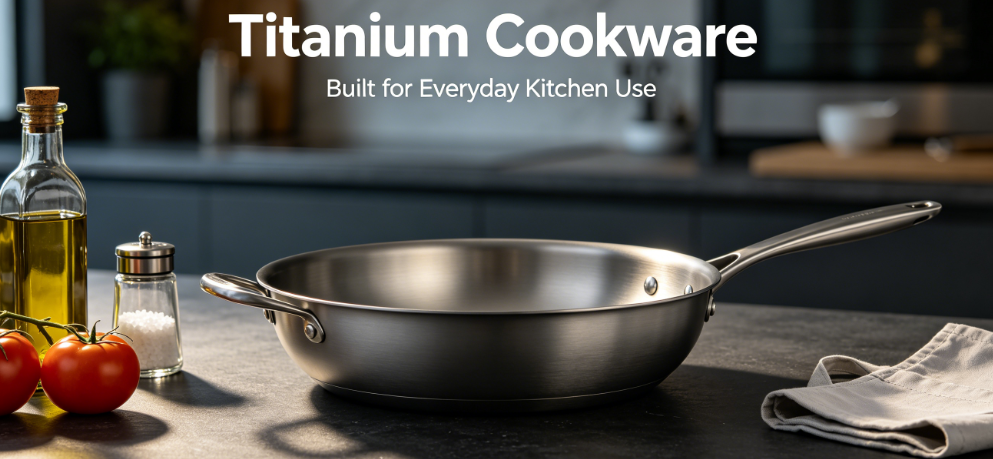
Introduction
Titanium cookware is becoming a popular choice for modern kitchens, especially among buyers who want lightweight, durable, and non-toxic cooking tools. Compared with traditional stainless steel, aluminum, and non-stick pans, titanium offers a unique combination of strength, corrosion resistance, and low reactivity.
This guide explains the main advantages of titanium cookware, how it compares with other materials, and what to consider before buying a titanium pot or pan.
1. What Is Titanium Cookware?
Titanium cookware refers to pots, pans, and other kitchen utensils made primarily from titanium or titanium alloys. In some products, titanium is used as the main body material, while in others it may be combined with coating systems or multi-layer structures to improve heat distribution and cooking performance.
Titanium is known for its high strength-to-weight ratio, corrosion resistance, and biocompatibility. These properties make it interesting not only for medical and aerospace applications but also for everyday kitchen use.
2. Key Benefits of Titanium Cookware
Lightweight and Easy to Handle
One of the most practical advantages is weight. Titanium is lighter than many other metals used in cookware, which makes titanium pots easier to lift, pour, and move around the kitchen. This is especially useful for daily cooking, frequent stirring, and serving food.
Durable and Long-Lasting
Titanium is a strong material that resists dents, scratches, and deformation better than aluminum and some softer metals. A well-made titanium pot can maintain its shape and performance over long-term use.
Corrosion Resistant
Titanium naturally forms a stable oxide layer on its surface. This layer helps protect the cookware from water, steam, acids, and salts commonly found in cooking. For users who want kitchen tools that can withstand daily wear and tear, this is a valuable property.
Low Reactivity
Titanium is generally considered a low-reactivity material. It does not easily react with food, which means it is less likely to affect the taste of dishes. For users who are concerned about metal leaching or unwanted flavor changes during cooking, titanium cookware is worth considering.
Easy to Clean
Smooth titanium surfaces are usually easier to clean than heavily textured or worn non-stick coatings. In many cases, food residues can be rinsed away with less effort, making titanium pots suitable for busy kitchens.
3. Titanium Cookware vs. Other Materials
Titanium vs. Stainless Steel
Stainless steel cookware is widely used and generally more affordable. However, titanium is lighter and often more corrosion-resistant. For users who prioritize easy handling and long-term durability, titanium can be a better choice.
Titanium vs. Aluminum
Aluminum is lightweight and conducts heat well, but it is softer and may react with certain foods. Titanium offers better strength and stability, though it is usually more expensive.
Titanium vs. Non-Stick Pans
Non-stick pans are easy to use for eggs, pancakes, and sticky foods, but their coatings can wear out over time. Titanium cookware is often more durable, but it may not have the same non-stick performance unless it includes a coating or special surface treatment.
Titanium vs. Cast Iron
Cast iron is excellent for heat retention and searing, but it is heavy and requires seasoning. Titanium is much lighter and easier to maintain, making it more suitable for everyday cooking.
4. Common Types of Titanium Cookware
Titanium Pots
Titanium pots are suitable for boiling water, making soup, steaming, and general cooking. They are often chosen for their light weight and corrosion resistance.
Titanium Frying Pans
Titanium frying pans can be used for stir-frying, sautéing, and quick cooking. Some models include non-stick coatings, while others rely on smooth titanium surfaces.
Titanium Milk Pans and Sauce Pans
Smaller titanium sauce pans are ideal for heating milk, making sauces, and preparing small portions. Their light weight makes them easy to handle.
Titanium Pressure Cookers
Some high-end kitchen products use titanium in pressure cooker designs. These models emphasize strength, safety, and durability under high-pressure cooking conditions.
5. Buying Considerations
Check the main material: Confirm whether the product is made of pure titanium, titanium alloy, or titanium-plated material. Solid titanium construction usually offers better durability.
Check the cooking surface: Decide whether you prefer a smooth titanium surface, a non-stick coating, or a multi-layer structure.
Consider heat distribution: Good cookware should distribute heat evenly. Some titanium products use layered bases to improve cooking performance.
Check handle design: Handles should be heat-resistant, comfortable to grip, and securely attached.
Look for easy cleaning: Smooth inner surfaces and removable parts can make daily cleaning easier.
Check capacity and size: Choose based on the number of people you usually cook for and the types of dishes you prepare.
Conclusion
Titanium cookware is a strong choice for buyers who want lightweight, durable, and low-reactivity kitchen tools. It performs well in daily cooking, boiling, steaming, stir-frying, and sauce preparation.
When buying titanium cookware, focus on material quality, cooking surface, heat distribution, handle design, and ease of cleaning. By selecting the right product, users can enjoy a more comfortable and reliable cooking experience over the long term.
Procurement5 min read·2026-06-16
Titanium Cookware: Benefits, Comparison and Buying Guide
Titanium cookware offers a lightweight, durable, and non-toxic alternative to traditional stainless steel, aluminum, and non-stick pans. Learn its benefits, safety considerations, and how to choose titanium pots for modern kitchens.