Introduction
Titanium cups are becoming increasingly popular for everyday drinking, outdoor activities, and even office use. Compared with stainless steel, plastic, and ceramic cups, titanium offers a unique combination of light weight, durability, and corrosion resistance. For buyers looking for long-term value and material performance, titanium drinkware is worth serious consideration.
This guide explains the main advantages of titanium cups, the difference between common types, and how to select a titanium cup that fits daily use, travel, and outdoor scenarios.
1. What Makes Titanium Cups Different?
Titanium is a high-performance metal known for its excellent strength-to-weight ratio and natural corrosion resistance. When used in drinkware, these properties create several noticeable advantages:
Lightweight feel: Titanium cups are often lighter than stainless steel cups of similar size, making them easier to carry during commuting, camping, or travel.
Strong and durable: Titanium resists dents, scratches, and deformation better than many everyday drinkware materials.
Corrosion resistant: Titanium forms a stable oxide layer on its surface, which helps protect the cup from water, beverages, and daily wear.
Less metallic aftertaste: Many users prefer titanium cups because they tend to preserve the original taste of water, coffee, or tea more naturally than some stainless steel options.
Easy to clean: Smooth titanium surfaces are generally easier to rinse and keep clean, which is useful for daily office and outdoor use.
2. Common Types of Titanium Cups
Titanium cups can be designed for different use scenarios. Buyers should consider whether they need a simple daily cup, an insulated version, or a specialized outdoor mug.
Single-Wall Titanium Cups
Single-wall titanium cups are lightweight and suitable for everyday drinking, coffee, tea, and water. They are often preferred by users who want a minimalist look and easy portability. Because they do not provide strong insulation, they are more ideal for short-term drinking and room-temperature or warm beverages.
Double-Wall Titanium Cups
Double-wall titanium cups offer better temperature retention than single-wall designs. They can keep hot drinks warmer for longer and reduce condensation on the outside. This type is more suitable for office use, long trips, and situations where beverage temperature matters.
Titanium Mugs and Handle Cups
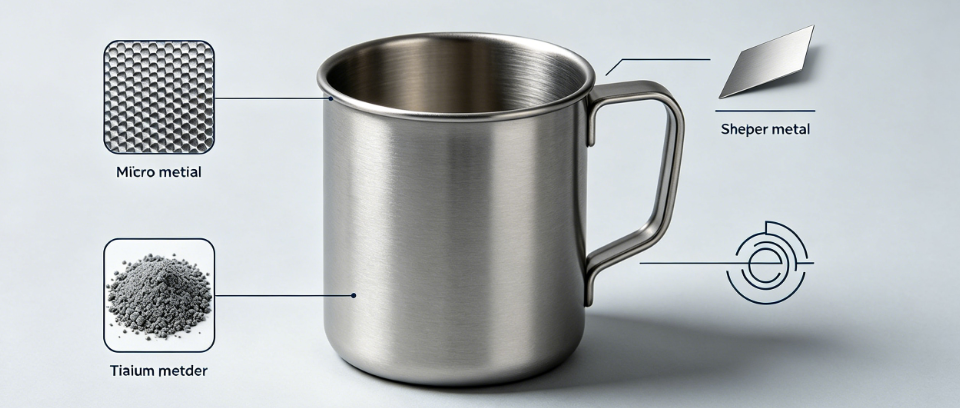
Titanium mugs usually come with a handle or a more structured body. They are suitable for home, office, and camping use, especially for users who prefer a more traditional cup shape. The handle design improves grip comfort, which is useful when drinking hot coffee or tea.
Folding and Outdoor Titanium Cups
Some titanium cups are designed for camping, hiking, and travel. They may feature stackable shapes, foldable handles, or compact storage designs. These models emphasize portability and space-saving, making them popular among outdoor enthusiasts.
3. Key Benefits for Different Users
For Daily Office Use
Titanium cups are suitable for office environments because they are lightweight, durable, and easy to clean. They can be used for water, coffee, tea, and other daily beverages. Compared with fragile ceramic cups, titanium cups are more resistant to accidental drops and collisions.
For Outdoor and Camping Use
Outdoor users value titanium cups for their low weight and high strength. When hiking, camping, or traveling, every item that reduces weight can make a difference. Titanium cups are also resistant to water and weather, which helps them perform well in variable outdoor conditions.
For Health-Conscious Users
Titanium is generally considered a safe material for drinkware. It does not easily react with beverages, and its smooth surface can reduce residue buildup. For users who want a reusable cup that is both durable and easy to maintain, titanium is a strong option.
4. What to Consider When Buying a Titanium Cup
When selecting a titanium cup, focus on material quality, design, intended use, and after-sales support.
Check the material grade: Look for cups made from commercially pure titanium or high-quality titanium alloys. The product description should clearly indicate whether the main body is titanium.
Confirm the structure: Decide between single-wall and double-wall designs based on whether you prioritize light weight or temperature retention.
Consider capacity: Choose a capacity that matches your daily drinking habits. Common options include around 300 ml, 400 ml, and 500 ml.
Check lid and handle design: If the cup will be carried frequently, look for a secure lid, comfortable grip, and easy-to-clean opening structure.
Look for clear product specifications: Reliable sellers usually provide material information, capacity, weight, dimensions, and cleaning instructions.
Conclusion
Titanium cups are an excellent choice for people who want lightweight, durable, and corrosion-resistant drinkware. They perform well in daily office use, outdoor activities, and travel scenarios. When buying a titanium cup, it is important to check the material grade, structure, capacity, and design details to ensure the product matches your actual needs.
Procurement5 min read·2026-06-15
Titanium Cups: Benefits, Types, and Buying Guide for Everyday Use
Titanium cups offer a lightweight, durable, and corrosion-resistant alternative to stainless steel, plastic, and ceramic drinkware. Learn their key benefits, common types, material grades, and what to consider before buying.