Titanium is known today as the "space-age metal"—a cornerstone of aerospace, medical, and industrial engineering, valued for its unmatched strength-to-weight ratio, corrosion resistance, and biocompatibility. But its journey from a forgotten mineral to a material that powers modern innovation was long and arduous. This guide walks through the discovery of titanium, the decades-long technical barriers that delayed its rise, and what modern buyers need to know about its production and sourcing.
1. The Discovery: A New Element in Black Sand (1791–1795)
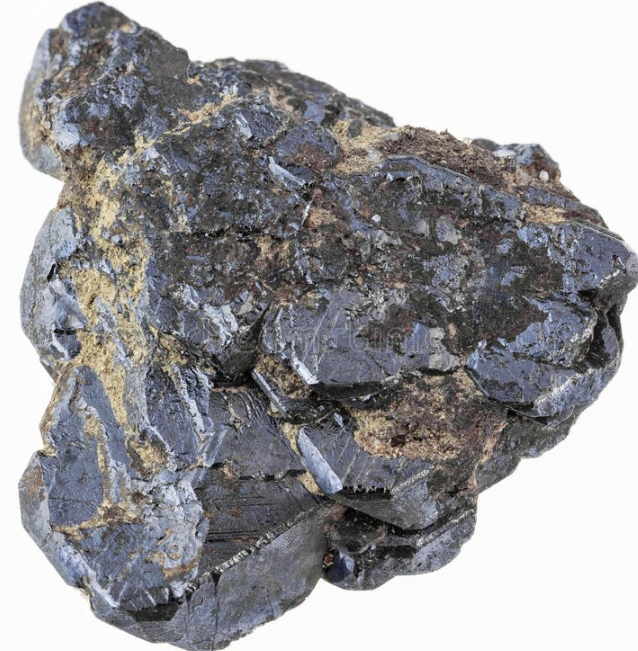
Titanium’s story begins in 1791, in the quiet English county of Cornwall. William Gregor, an amateur mineralogist and clergyman, was analyzing black magnetic sand (later identified as ilmenite ore) from a local stream when he isolated an unknown metallic oxide. Though he couldn’t extract pure metal, he confirmed the presence of a new element, which he named "menachanite" after the local parish.
Four years later, in 1795, German chemist Martin Heinrich Klaproth independently discovered the same element in rutile ore. Fascinated by its apparent strength and resilience, he renamed it titanium, after the Titans of Greek mythology—the powerful, immortal giants who ruled before the Olympians. The name stuck, foreshadowing the metal’s eventual rise to industrial dominance.
2. The "Lost Century": Why Titanium Remained Trapped (1800s–1900s)
For nearly 150 years after its discovery, titanium was nothing more than a laboratory curiosity. The problem lay in its chemistry:
Titanium is highly reactive at high temperatures, forming extremely stable bonds with oxygen, nitrogen, and carbon. 19th-century metallurgy lacked the technology to break these bonds without contaminating the metal.
Early attempts to reduce titanium oxide produced only brittle, impure alloys—too weak and fragile for any practical use.
Even when pure titanium was briefly isolated in small quantities, the process was prohibitively expensive, making it impossible to scale.
Titanium was, quite literally, a metal trapped by its own properties.
3. The First Breakthrough: Pure Titanium Is Born (1910)
The first major step forward came in 1910, when American chemist Matthew A. Hunter developed the Hunter Process. By heating titanium tetrachloride (TiCl₄) with sodium under high pressure, he produced the first-ever sample of 99.9% pure titanium metal.
This was a scientific milestone, but it still wasn’t enough for commercial use. The process was slow, energy-intensive, and costly—producing just a few pounds of pure titanium at a time. Titanium remained a luxury material, far out of reach for mass production.
4. The Industrial Revolution: The Kroll Process (1930s–1940s)
The turning point came with the outbreak of World War II, as military engineers searched for a lightweight, corrosion-resistant metal to build aircraft and submarines. In 1937, Luxembourgish chemist William Kroll revolutionized the industry with his invention of the Kroll Process.
The Kroll Process replaced sodium with magnesium as the reducing agent, allowing for larger-scale, more efficient production of titanium sponge—the porous, raw form of titanium that forms the basis of all commercial titanium products. By the 1950s, this method had become the global standard, finally unlocking titanium’s industrial potential.
5. Titanium Takes Flight: From Military to Everyday Use (1950s–Today)
With scalable production now possible, titanium quickly found its place in critical industries:
Aerospace & Defense: The U.S. military began using titanium in jet engines, airframes, and missile components, leveraging its light weight and heat resistance to boost performance.
Medical Devices: By the 1960s, titanium’s biocompatibility made it the gold standard for implants, prosthetics, and surgical tools.
Consumer & Industrial Use: As production costs gradually fell, titanium expanded into everyday life—from watches and smartphones to cookware and outdoor gear.
Today, titanium is no longer just a "military metal" or a "space metal." It’s a versatile material powering innovation across every sector.
Buyer-Focused Notes: What This History Means for Your Sourcing
Titanium’s long journey from discovery to mass production directly impacts how you should source it today:
Production Process & Quality:
The Kroll Process remains the industry standard, but the quality of the final product depends on the purity of the titanium sponge and subsequent processing (melting, forging, machining). Always verify that your supplier uses certified, high-grade sponge.
Grade Selection & Certification:
Titanium’s reactivity means even small impurities can drastically affect its performance. For critical applications, confirm:
CP Titanium (Grades 1–4): High purity, ideal for medical, food-grade, and chemical processing use.
Grade 5 (Ti-6Al-4V): The most common alloy, used for aerospace, automotive, and structural parts.
Required certifications (ASTM, ISO, FDA, or industry-specific standards) for compliance.
Cost Transparency:
Titanium’s high price stems from its energy-intensive extraction and processing. When comparing quotes, ask your supplier to break down costs by:
Titanium sponge source (primary vs. recycled)
Processing steps (melting, forming, finishing)
Quality control and testing requirements
If you have questions about specific titanium grades, processing capabilities, or custom applications, the CNBJTI team is here to help. We offer tailored support for sourcing everything from raw titanium sponge to finished components.
FAQ5 min read·2026-05-25
The Discovery of Titanium: A 150-Year Journey from Ore to Aerospace Supermetal
Discover the fascinating 150-year history of titanium, from its discovery in 1791 to its rise as a critical aerospace and medical metal. Includes essential buyer insights on grades, processing, and certifications.