Introduction
Titanium is a versatile metal prized for its unique combination of strength, light weight, and biocompatibility. From body jewelry to life-saving medical implants, its properties make it ideal for a wide range of applications where safety and durability are paramount.
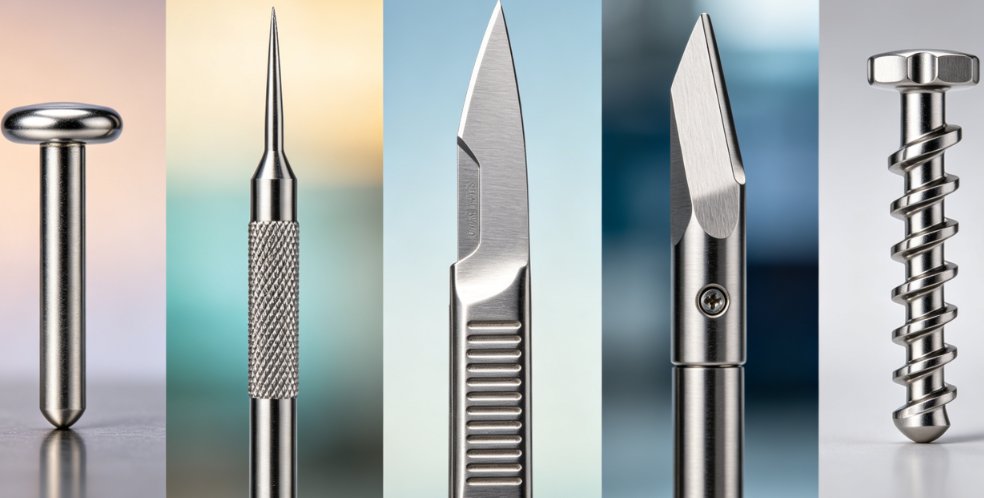
This guide explores titanium’s uses and safety across four key areas: ear piercings, health and medicine, knife blades, and MRI-safe implants.
1. Titanium for Ear Piercings: Safe and Hypoallergenic
Titanium is the gold standard for new piercings and sensitive skin:
Hypoallergenic: Unlike nickel-containing metals, titanium is pure and non-reactive, making it ideal for people with metal allergies.
Biocompatible: It won’t irritate healing piercings, reducing the risk of infection or rejection.
Durable: Titanium jewelry is scratch-resistant and won’t tarnish, maintaining its appearance for years.
2. Titanium in Health and Medicine
Beyond piercings, titanium plays a critical role in healthcare:
Medical implants: Titanium is used in joint replacements, dental implants, and spinal hardware due to its ability to fuse with bone (osseointegration).
Corrosion resistance: The human body’s fluids are corrosive, but titanium’s protective oxide layer prevents degradation.
Lightweight strength: Titanium implants are lighter than steel, reducing stress on the body.
3. Titanium for Knife Blades: Strength Meets Lightweight
Titanium is gaining popularity in the knife-making industry:
Strength-to-weight ratio: Titanium blades are lighter than steel but still strong enough for everyday use.
Corrosion resistance: They won’t rust, making them ideal for outdoor or marine applications.
Drawbacks: Titanium is softer than high-carbon steel, so it doesn’t hold an edge as long and is harder to sharpen.
4. MRI Safety: Why Titanium Implants Are Non-Magnetic
One of titanium’s most important safety features is its non-ferromagnetic nature:
No MRI interference: Unlike iron or steel, titanium isn’t attracted to magnets, so implants won’t move or heat up during an MRI scan.
Patient safety: This allows people with titanium implants to undergo essential imaging without risk.
Conclusion
Titanium’s unique properties make it a material of choice across diverse industries. Whether you’re choosing safe body jewelry, a durable knife, or a life-saving medical implant, titanium offers unmatched safety, durability, and versatility.
Applications4 min read·2026-06-11
Titanium: Exploring Its Uses and Safety for Ear Piercings, Health, Knife Blades, and MRI Implants
A guide to titanium’s diverse applications and safety, covering ear piercings, medical health uses, knife blades, and MRI-safe implants. Includes notes on material selection, corrosion resistance, and documentation for buyers.