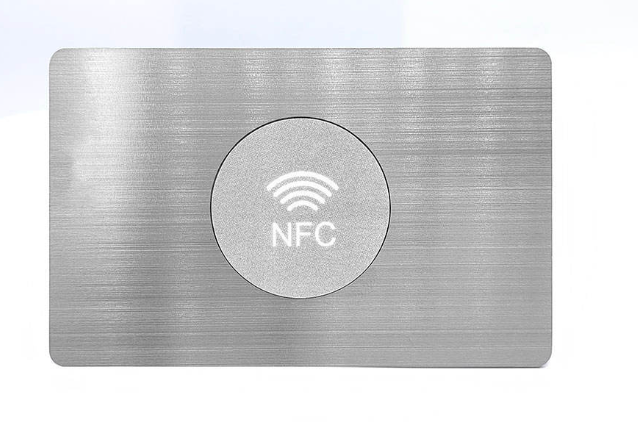
Titanium has become a premium material for custom metal access‑control cards, hotel key cards, membership cards and smart door cards. Compared with stainless steel, brass or aluminum, titanium delivers unique performance for high‑end access‑card hardware projects.
Why Choose Titanium for Access Control Cards
Ultra‑light weight
Titanium density is only 4.51 g/cm³. Titanium cards feel thin and lightweight in wallets, without the heavy weight of stainless‑steel alternatives.
Superior corrosion & rust resistance
Pure titanium forms a stable passive oxide layer. It resists sweat, humidity, hand grease and daily oxidation. Titanium access cards will never rust even under long‑term daily contact with human skin. No discoloration after years of use.
Premium metallic texture
Titanium supports diversified surface finishes: brushing, sandblasting, anodizing color, laser engraving, etching logos. Matte low‑gloss titanium look fits luxury hotels, high‑end office buildings, club membership access cards.
Non‑magnetic property
Pure titanium and most titanium alloys are non‑magnetic. It will not interfere with RFID chip inside the access‑control card. This is a critical advantage over some magnetic metal materials.
High strength & wear resistance
Titanium is tough and anti‑scratch. Cards resist bending and daily abrasion, extending service life for frequent‑use access‑control scenarios.
Common Titanium Grades for Access‑Control Cards
Grade 1 / TA1 (Commercially Pure Titanium)
High ductility, easy stamping, bending and deep drawing.
Best choice for thin‑wall, thin‑gauge titanium access cards.
Excellent anodizing coloring effect for multi‑color custom cards.
Ideal: hotel key cards, thin membership access cards.
Grade 2 / TA2 (Commercially Pure Titanium)
Balanced strength and formability, most widely used grade for titanium hardware.
Good for laser engraving, etching and surface processing.
Recommended for most standard custom titanium door access cards.
Grade5 / TC4 (Ti‑6Al‑4V Titanium Alloy)
Much higher mechanical strength. Harder, anti‑bending.
Less ductility, not suitable for complex deep stamping.
Use case: thick, heavy‑duty titanium access cards, mechanical key card panels.
Note: TC4 is not the first option for ultra‑thin access‑control cards.
Main Manufacturing & Surface Options
Laser engraving: Logo, company name, serial number, QR code. Permanent marking, will not wear off.
Chemical etching: Hollow‑out patterns, text patterns for decorative titanium cards.
Surface finish: Brushed, matte sandblasting, mirror polishing.
Anodization: Produce gold, blue, grey, black colors without paint coating. No paint peeling risk.
Embedding: Cooperate with manufacturers to reserve space for embedding RFID/NFC chips for smart access‑control function.
Practical Procurement Notes
Confirm card thickness: Common thickness ranges from 0.5 mm‑1.2 mm. Thin cards prefer TA1 / Grade1 pure titanium.
Chip compatibility: Confirm non‑magnetic pure titanium if you install internal RFID chips. Avoid magnetic interference.
Sample evaluation: Request material test report EN 10204 3.1 before mass order.
Tolerance: Titanium stamping has special tolerance requirements, confirm drawing with supplier in advance.
Application Scenarios of Titanium Access‑Control Cards
Luxury hotel titanium key cards
High‑end office building access control cards
Villa community smart door cards
High‑grade club membership access cards
Custom souvenir metal NFC titanium cards
Conclusion
Titanium access‑control cards combine light weight, rust‑free performance, non‑magnetic feature and premium appearance. For most general custom projects, Grade2 / TA2 pure titanium is the cost‑effective default choice. Select TA1(Grade1) for ultra‑thin cards, and TC4 only for high‑strength thick‑panel needs.
If you need custom titanium access‑control cards, confirm drawing, thickness, surface finish and material grade with your titanium supplier for stable output quality.
Technical Guide5 min read·2026-09-01
Complete Guide to Titanium Grades: Titanium for Door Access Control Cards
Titanium and titanium alloys are widely used for metal access‑control cards, key cards and smart door cards. Learn TA1, TA2, TC4 material selection, surface treatment, advantages and practical procurement tips for titanium door access cards.