Introduction
Seawater aquaculture places high demands on equipment durability. Fish farms, shrimp farms, and marine cultivation systems are constantly exposed to saltwater, moisture, biofouling, temperature changes, and mechanical stress. For this reason, material selection directly affects equipment lifespan, maintenance cost, and operational reliability.
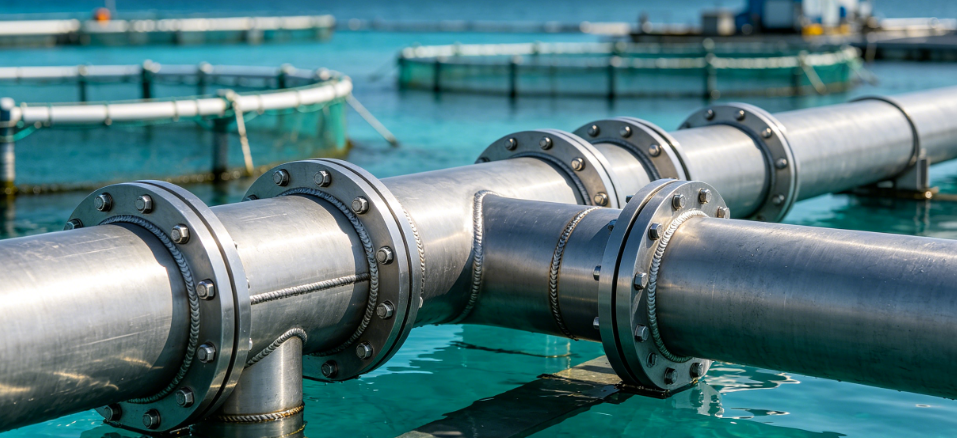
Titanium has emerged as a strong solution for seawater farming applications. Its natural corrosion resistance, high strength-to-weight ratio, and compatibility with marine environments make it suitable for aquaculture tanks, piping systems, heat exchangers, and critical farm equipment.
1. Why Titanium Is Suitable for Seawater Aquaculture
Seawater contains salt, dissolved oxygen, and various microorganisms that can accelerate metal corrosion. Traditional materials such as carbon steel and some stainless steels may degrade over time, especially in continuous saltwater exposure.
Titanium offers several advantages for this challenging environment:
Excellent seawater corrosion resistance: Titanium forms a stable oxide layer that protects the surface from saltwater attack.
High strength-to-weight ratio: Titanium provides structural strength without the excessive weight of many metals.
Long service life: It can reduce the frequency of equipment replacement and lower long-term operating costs.
Low maintenance: Titanium surfaces are often easier to clean and less prone to rust-related failures.
Marine environment compatibility: It performs well in fish farms, coastal facilities, and offshore aquaculture systems.
2. Corrosion Resistance in Saltwater Environments
One of the most important benefits of titanium in aquaculture is its resistance to saltwater corrosion. When titanium is exposed to seawater, it develops a thin but protective titanium dioxide layer. This layer helps prevent further oxidation and reduces the risk of rust, pitting, and material degradation.
This property is especially valuable in aquaculture because farm equipment is often in continuous contact with seawater. Pipes, tanks, and mechanical components must remain reliable over months or years of operation.
However, titanium performance can still be affected by extreme conditions, such as high temperatures, heavy fouling, or abnormal water chemistry. Therefore, equipment design, surface treatment, and regular inspection remain important.
3. Key Applications of Titanium in Aquaculture
Aquaculture Tanks
Titanium tanks are used for holding fish, shrimp, and other aquatic species. They are suitable for seawater systems where corrosion resistance and hygiene are important. Titanium tanks can help reduce contamination risks and maintain stable farming conditions.
Seawater Piping Systems
Pipes in aquaculture systems transport seawater, oxygenated water, and wastewater. Titanium pipes resist saltwater corrosion and are lighter than many traditional metal pipes, making them easier to install and maintain.
Heat Exchangers
Temperature control is critical in aquaculture. Titanium heat exchangers help regulate water temperature efficiently while resisting corrosion from seawater. They are suitable for indoor farms, recirculating systems, and hatcheries.
Fish Farm Equipment
Titanium components are used in feeding systems, aerators, water treatment equipment, and monitoring structures. Their strength and corrosion resistance make them suitable for continuous operation in coastal and offshore environments.
Offshore Aquaculture Structures
As aquaculture moves into more exposed offshore environments, equipment must withstand waves, currents, and harsh weather. Titanium’s combination of strength and lightweight properties makes it useful for floating structures, mooring components, and subsea equipment.
Water Treatment Components
Recirculating aquaculture systems require reliable water treatment. Titanium can be used in filtration systems, disinfection equipment, and chemical dosing components where corrosion resistance and material stability are needed.
4. Titanium vs. Other Aquaculture Materials
Titanium vs. Stainless Steel
Stainless steel is widely used in aquaculture equipment, but it can still suffer from pitting corrosion in saltwater. Titanium offers better resistance to seawater corrosion and is often more reliable in long-term coastal use.
Titanium vs. Carbon Steel
Carbon steel is low-cost but heavy and prone to rust. It requires regular painting and maintenance. Titanium is more expensive initially but can reduce maintenance and replacement costs over time.
Titanium vs. Plastic
Plastic is lightweight and low-cost, but it may have temperature limitations, lower structural strength, and shorter lifespan in demanding systems. Titanium is more suitable for high-reliability and high-load applications.
Titanium vs. Copper Alloys
Copper alloys can offer good corrosion resistance, but they are often heavier and more expensive. Titanium provides a strong alternative with better strength-to-weight performance.
5. Buying and Specification Considerations
Evaluate water conditions: Confirm salinity, temperature, pH level, and potential fouling conditions.
Select the right titanium grade: Commercially pure titanium is often suitable for general aquaculture equipment, while titanium alloys may be used for higher-strength components.
Check manufacturing standards: Look for ASTM standards, material test reports, and corrosion performance data.
Consider equipment design: Tanks, pipes, heat exchangers, and offshore structures have different load and corrosion requirements.
Verify fabrication quality: Welding, forming, and surface treatment affect the long-term performance of titanium equipment.
Plan for maintenance: Although titanium is low-maintenance, regular cleaning, inspection, and fouling control are still necessary.
Conclusion
Titanium is a highly suitable material for modern seawater aquaculture. Its excellent corrosion resistance, high strength-to-weight ratio, and long-term reliability make it ideal for fish tanks, piping systems, heat exchangers, offshore structures, and water treatment components.
When selecting titanium equipment for aquaculture, it is important to consider water conditions, material grade, manufacturing standards, equipment design, and maintenance requirements. With proper specification, titanium can help aquaculture operators improve system reliability, reduce downtime, and lower long-term operational costs.
Technical Guide5 min read·2026-06-16
Titanium in Aquaculture: Corrosion Resistant Equipment for Seawater Farming
Titanium is increasingly used in seawater aquaculture due to its excellent corrosion resistance, lightweight strength, and long-term reliability in fish farms, tanks, piping, and seawater handling systems.