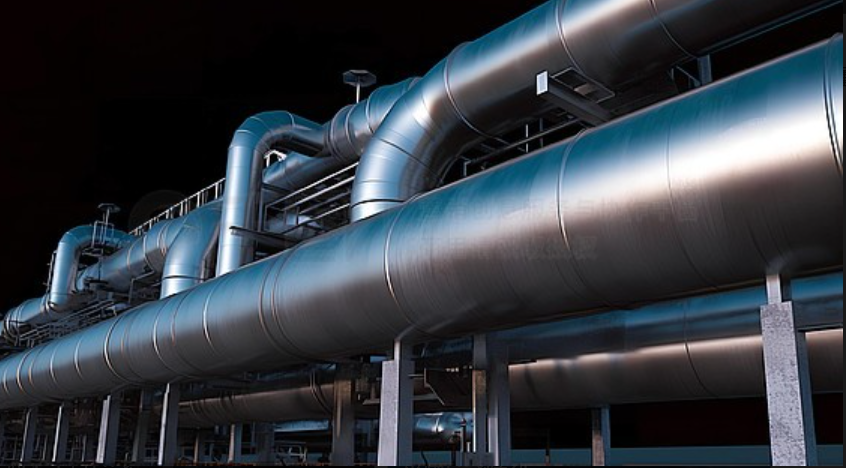
Oil and gas pipeline systems face some of the harshest operating conditions on earth: high chloride seawater, CO₂, hydrogen sulfide (sour gas), high pressure, temperature cycling and flow erosion. Carbon steel and duplex stainless steel often suffer premature corrosion, cracking and high maintenance costs. Titanium and titanium alloys have become a premium, proven material choice for critical oil & gas pipeline sections, subsea jumpers, produced water lines and offshore seawater piping.
Why Titanium for Oil & Gas Pipelines?
The core advantage of titanium is its self-healing passive titanium oxide film. Once exposed to oxygen, this thin stable layer forms instantly. If scratched or damaged, it regenerates quickly to block chloride pitting, crevice corrosion and stress corrosion cracking.
Superior corrosion resistance:Excellent resistance to seawater, brine, CO₂ and many acidic produced fluids.
High strength-to-weight ratio:Lighter than steel, easier for offshore transportation and installation.
Long service life:Field cases show titanium piping can deliver 20+ years of reliable service, far outperforming super duplex stainless steel in seawater circuits.
Fatigue resistance:Good resistance to cyclic load and vibration fatigue for subsea dynamic pipelines.
Non-sparking & non-magnetic:Safe for explosive hydrocarbon environments.
Common Titanium Grades Used in Oil & Gas Pipeline Projects
Grade 2 (Commercially Pure Titanium / TA2)
The most widely used grade for seawater cooling lines, fire water pipelines and low-to-moderate pressure produced water circuits. Easy welding, stable performance in chloride environments, supplied to ASTM B861 seamless pipe and ASTM B862 welded pipe standards.
Grade 7 (Ti-0.15Pd)
Palladium-alloyed titanium, improved resistance to reducing acids. Selected for aggressive acidic brine and wellhead process piping.
Grade 12 (Ti-0.3Mo-0.8Ni / TA10)
The key grade for sour gas service. Compliant with NACE MR0175 / ISO 15156 for qualified sour H₂S environments. It is the primary titanium alloy engineers specify for sour oil & gas gathering pipelines.
Grade 5 (Ti-6Al-4V / TC4)
High strength alloy, mostly used for high-pressure pipeline fittings, flanges, subsea structural connectors instead of long straight pipe runs.
Typical Application Scenarios
✅ Offshore platform seawater intake & cooling pipelines
✅ Subsea short jumpers, riser auxiliary lines
✅ Produced water injection pipelines
✅ Sour gas gathering lines (Grade 12, NACE qualified)
✅ Pipeline fittings: titanium elbows, tees, flanges and clad spools
✅ Fire protection piping on floating production units
Key Considerations for Engineering & Procurement
Sour service validation:Only approved grades and heat treatment conditions meet NACE MR0175. Grade 12 needs strict hardness control for H₂S service.
Galvanic corrosion control:Avoid direct coupling with carbon steel without proper isolation or cathodic protection design.
Welding & inspection:Titanium welding requires full inert gas shielding; 3.1 / 3.2 material test certificates (EN 10204) are standard for oil & gas projects.
Initial cost vs lifecycle cost:Titanium has higher upfront cost, but reduces shutdown, replacement and leak risk for remote subsea assets.
Summary
Titanium is not a universal replacement for carbon steel trunk lines, but it delivers unmatched reliability for the most corrosive, high-risk sections of oil and gas pipeline systems. For material engineers, procurement and asset owners, selecting the correct titanium grade, standard and NACE qualification is the critical step to balance safety, service life and total cost of ownership.
If you need titanium pipe, fittings or technical datasheets for your oil & gas project, contact our team for ASTM-compliant quotation and metallurgy support.
Technical Guide5 min read·2026-10-22
Titanium Materials for Oil & Gas Pipeline Applications
Discover titanium grades for oil and gas pipelines, including Grade 2, Grade 7, Grade 12. Learn corrosion performance, sour service compliance under NACE MR0175, typical use cases and procurement guidance for offshore & subsea pipeline systems.