Titanium is a material of choice for high-performance prototypes and low-volume production across aerospace, medical, and industrial sectors, thanks to its exceptional strength-to-weight ratio, corrosion resistance, and biocompatibility. However, its unique metallurgical properties present specific challenges for prototyping and small-batch manufacturing. This guide breaks down the technical considerations, process workflows, and buyer-focused best practices to help you bring your titanium component from concept to functional prototype efficiently.
Material Selection for Prototyping and Small Batches
The first critical step is choosing the right titanium grade for your application, as material selection directly impacts machining difficulty, cost, and final performance.
Commercially pure (CP) titanium grades (Grades 1–4) are ideal for most prototyping applications. They offer excellent ductility, weldability, and corrosion resistance, making them easier to machine and modify during early development. Grade 2 is the most common choice, balancing strength and formability for general-purpose prototypes.
For applications requiring higher strength, such as structural or load-bearing parts, Grade 5 (Ti-6Al-4V) titanium alloy is widely used. While it offers superior mechanical properties, it is more challenging to machine due to its high strength and low thermal conductivity, which can increase tool wear and production time. For small batches, it is important to confirm your supplier’s experience with Grade 5 to avoid delays or defects.
Common Manufacturing Routes for Titanium Prototypes
Prototyping titanium parts requires careful planning to balance speed, cost, and part integrity. The most common processes are:
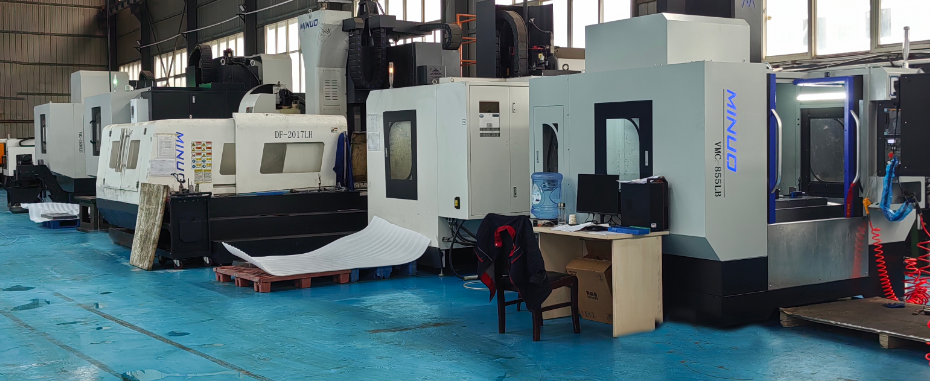
CNC Machining is the primary method for producing functional titanium prototypes. 3-axis and 5-axis CNC machines are used to remove material from solid billets, allowing for high precision and complex geometries. Titanium’s low thermal conductivity means heat builds up at the cutting edge, which can cause tool wear and surface hardening. To mitigate this, high-pressure coolant and slow, controlled cutting speeds are essential. For small batches, CNC machining offers excellent repeatability and is often the most cost-effective option for parts with well-defined geometries.
3D Printing (Additive Manufacturing) is increasingly popular for titanium prototyping, especially for complex, lightweight geometries that are difficult to machine. Processes like Selective Laser Melting (SLM) produce near-net-shape parts directly from CAD models, reducing material waste and lead times. Post-processing steps, such as heat treatment and CNC finishing, are required to improve surface finish and mechanical properties. While 3D printing is ideal for highly complex designs, it can be more expensive than CNC machining for simple parts in small quantities.
Forming and Fabrication methods, such as sheet metal bending, hydroforming, and welding, are used for thin-walled or tubular prototypes. Titanium’s high reactivity at high temperatures requires specialized inert gas shielding during welding to prevent contamination and ensure strong, corrosion-resistant joints. These methods are common in applications like exhaust systems and heat exchangers.
Critical Technical Challenges and Mitigation
Titanium prototyping presents unique technical hurdles that must be addressed to ensure part quality and avoid costly delays.
One major challenge is tool wear and material hardening. Titanium has a tendency to work-harden when machined at incorrect speeds, leading to poor surface finish and accelerated tool degradation. Using sharp, high-quality carbide tools with proper coatings, along with optimized cutting parameters and generous coolant flow, is essential.
Another key consideration is thermal management. The low thermal conductivity of titanium traps heat at the cutting zone, which can cause thermal distortion in thin-walled parts and residual stresses in the material. Rigid fixturing and careful process planning, such as using climb milling and taking light cuts, help minimize these effects.
For additive manufacturing, the primary challenges are porosity and residual stress. Post-processing steps like hot isostatic pressing (HIP) and stress-relief heat treatment are often required to eliminate internal voids and improve mechanical consistency.
Quality Control and Validation for Small Batches
Quality control is critical, even in small-batch production, to ensure prototypes meet design specifications.
Dimensional inspection using coordinate measuring machines (CMM) and optical comparators verifies that all critical features are within tolerance. Titanium’s tendency to spring back during forming and machining means that parts may require iterative adjustments to meet exact dimensions.
Material and mechanical testing is essential, especially for parts intended for high-stress applications. Common tests include chemical analysis to verify alloy composition, tensile testing to confirm strength, and corrosion resistance testing for parts exposed to harsh environments.
Surface finish inspection ensures that parts meet both functional and aesthetic requirements. Processes like passivation or pickling may be required to remove surface contaminants and restore the natural corrosion resistance of titanium.
Buyer’s Guide: Preparing for Your RFQ
To ensure a smooth and successful prototyping process, prepare a clear and detailed RFQ (Request for Quotation) for your supplier.
Start with a complete technical package, including CAD files, 2D drawings with tolerances, and material specifications. Clearly state the titanium grade, required quantity (including prototype and small-batch volumes), and delivery timeline. Be specific about critical features, surface finishes, and any required certifications, such as ISO or ASTM standards.
Include information about the end-use application, as this helps the supplier recommend the most suitable manufacturing process and quality control steps. For example, a medical implant will require different handling and validation than an industrial component.
When evaluating quotes, compare not only the unit price but also the supplier’s experience with titanium, their lead times, and their quality assurance processes. A slightly higher price from a supplier with proven expertise in titanium prototyping can save significant time and cost in the long run.
Processing Guide6 min read·2026-05-25
Small Batches and Prototype Development for Titanium Parts: A Technical Guide
Learn how to plan, quote, and produce small-batch and prototype titanium parts efficiently, including material selection, machining routes, quality checks, and key RFQ tips for buyers.