Introduction
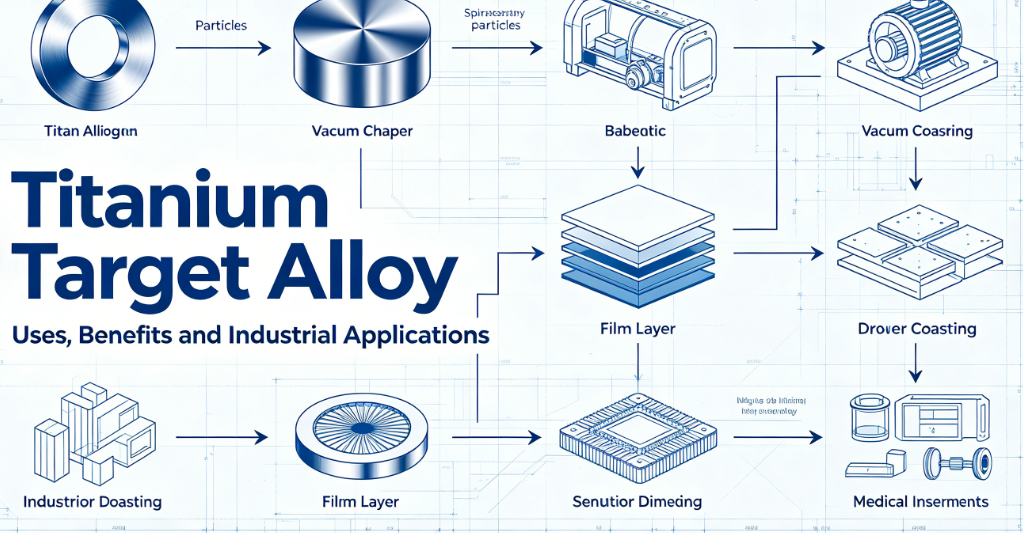
Titanium target alloy is a high-performance material used in many advanced industrial fields. It is especially important in physical vapor deposition, semiconductor manufacturing, aerospace engineering, medical devices, and surface coating technology.
As a target material, titanium alloy is used to produce thin films, protective layers, and functional coatings on various substrates. Its combination of strength, corrosion resistance, biocompatibility, and high-temperature stability makes it suitable for applications where ordinary materials may fail.
1. What Is Titanium Target Alloy?
Titanium target alloy refers to titanium-based alloy materials manufactured into target shapes for use in vacuum coating and material deposition processes. These targets are usually made from high-purity titanium or titanium alloys, such as Ti-Al, Ti-V, Ti-Ni, Ti-Ta, and other customized alloy systems.
In many cases, titanium alloy targets are used in sputtering systems, where material is ejected from the target surface and deposited onto a substrate to form a thin, uniform film. The quality of the target material directly affects the uniformity, adhesion, and performance of the final coating.
2. Key Benefits of Titanium Target Alloy
High Purity and Uniformity
Titanium target alloys can be produced with high purity and controlled microstructure. This is important for consistent sputtering performance, stable deposition rates, and reliable thin-film quality.
Excellent Corrosion Resistance
Titanium naturally forms a protective oxide layer, which gives it good resistance to corrosion and chemical attack. This property is valuable in coating applications that require long-term stability in harsh environments.
High Strength and Durability
Titanium alloys offer high strength-to-weight ratios and good mechanical stability. This makes them suitable for targets that must withstand high-energy plasma, thermal cycling, and continuous industrial operation.
Good Film-Forming Properties
Titanium and titanium alloys can form uniform, adherent thin films on various surfaces. These films are often used to improve wear resistance, corrosion resistance, electrical properties, and aesthetic appearance.
Biocompatibility
Titanium is widely recognized for its good biocompatibility. Titanium alloy targets are used in medical device coating applications where safety, stability, and tissue compatibility are important.
High-Temperature Stability
Many titanium alloys maintain good performance at elevated temperatures. This makes them useful in aerospace, high-temperature coatings, and industrial applications involving thermal stress.
3. Main Applications of Titanium Target Alloy
Sputtering Targets
Titanium alloy sputtering targets are used in vacuum coating systems to deposit thin films onto substrates. This process is common in semiconductor manufacturing, display technology, optical coatings, and decorative coatings.
PVD Coatings
Physical Vapor Deposition is one of the most important applications for titanium target alloys. Titanium-based coatings can improve surface hardness, wear resistance, corrosion resistance, and high-temperature stability of tools, molds, and machine components.
Semiconductor Industry
In semiconductor manufacturing, titanium and titanium alloy targets are used to form thin-film barriers, adhesion layers, and conductive layers. They help improve device performance, reliability, and production stability.
Aerospace Components
Titanium target alloys are used in aerospace for both component manufacturing and surface coating. They provide high strength, low density, and good resistance to high temperatures and corrosion.
Medical Device Coatings
Due to their biocompatibility, titanium alloy targets are used in medical device coatings. They can improve the surface performance of implants, surgical instruments, and dental components.
Decorative and Functional Coatings
Titanium-based coatings can also provide decorative colors, metallic luster, and fingerprint resistance. They are used in consumer electronics, watches, jewelry, and high-end hardware products.
Industrial Tools and Molds
Titanium and titanium alloy coatings can extend the service life of cutting tools, forming dies, and molds. They reduce friction, improve wear resistance, and help maintain surface quality during production.
4. Common Titanium Target Alloy Types
Titanium-Aluminum Alloys
Ti-Al alloys are widely used in high-temperature applications and protective coatings. They offer a good balance of strength, lightweight properties, and thermal stability.
Titanium-Vanadium Alloys
Ti-V alloys are known for their good mechanical properties and formability. They are often considered in applications requiring high strength and reliable performance.
Titanium-Nickel Alloys
Ti-Ni alloys are used in shape memory and superelastic applications. They are also relevant in medical devices and specialized coating systems.
Titanium-Tantalum Alloys
Ti-Ta alloys offer improved corrosion resistance and biocompatibility. They are suitable for medical, chemical, and high-performance coating applications.
Custom Titanium Alloys
Many industrial applications require customized titanium target alloys. These may include specific elements such as aluminum, vanadium, nickel, tantalum, niobium, zirconium, and others to meet precise performance requirements.
5. Buying and Specification Considerations
Determine the application: Confirm whether the target will be used for sputtering, PVD coating, semiconductor, aerospace, medical, or decorative coating.
Check material purity: High-purity targets are important for consistent thin-film performance.
Select the correct alloy composition: Choose Ti-Al, Ti-V, Ti-Ni, Ti-Ta, or custom alloy based on functional requirements.
Verify target size and shape: Targets should match the coating equipment, sputtering system, and substrate size.
Consider microstructure uniformity: Uniform grain structure helps ensure stable deposition and fewer defects.
Check manufacturing standards: Look for material certificates, test reports, and compliance with industry specifications.
Evaluate after-sales support: Target conditioning, bonding, and recycling services can affect overall cost efficiency.
Conclusion
Titanium target alloy is a versatile material used in sputtering, PVD coating, semiconductor manufacturing, aerospace components, medical devices, and industrial surface treatment. Its high purity, corrosion resistance, mechanical strength, biocompatibility, and high-temperature stability make it suitable for many advanced industrial applications.
When selecting titanium target alloy, it is important to consider application requirements, alloy composition, purity, target size, microstructure, and manufacturing standards. With proper selection, titanium target alloys can improve coating performance, extend equipment life, and support high-quality industrial production.
Applications5 min read·2026-06-17
Titanium Target Alloy: Uses, Benefits and Industrial Applications
Titanium target alloys are widely used in sputtering, PVD coating, aerospace components, medical devices, and industrial surface treatment due to their high strength, corrosion resistance and excellent film-forming properties.