Introduction
Marine and offshore engineering present some of the harshest environments on Earth, where saltwater, high pressure, and constant corrosion threaten the integrity of structures and equipment. For decades, titanium has been the unsung hero of these industries, quietly enabling reliable, long-lasting performance in conditions that would destroy most other metals.
This guide explores why titanium is indispensable to marine engineering, based on industrial specifications from CNBJTI, covering its key applications, benefits, and procurement considerations for offshore and desalination projects.
Why Titanium Dominates in Marine Environments
Titanium’s unique properties make it perfectly suited to the challenges of seawater.
Unrivaled Corrosion Resistance: Titanium forms a stable, protective oxide layer that is completely immune to saltwater corrosion, even in stagnant or polluted seawater. Unlike steel or copper alloys, it does not require expensive coatings or cathodic protection.
High Strength-to-Weight Ratio: Titanium is strong yet lightweight, making it ideal for components where reducing weight improves efficiency, such as heat exchangers and piping systems.
Biofouling Resistance: While not entirely immune to marine growth, titanium’s smooth surface and chemical inertness make it far more resistant to biofouling than other metals, reducing maintenance needs.
Non-Toxicity: Titanium does not leach harmful ions into water, making it safe for use in desalination plants and marine life habitats.
Key Applications in Marine and Offshore Engineering
Titanium is used in a wide range of critical marine components.
Heat Exchangers and Condensers
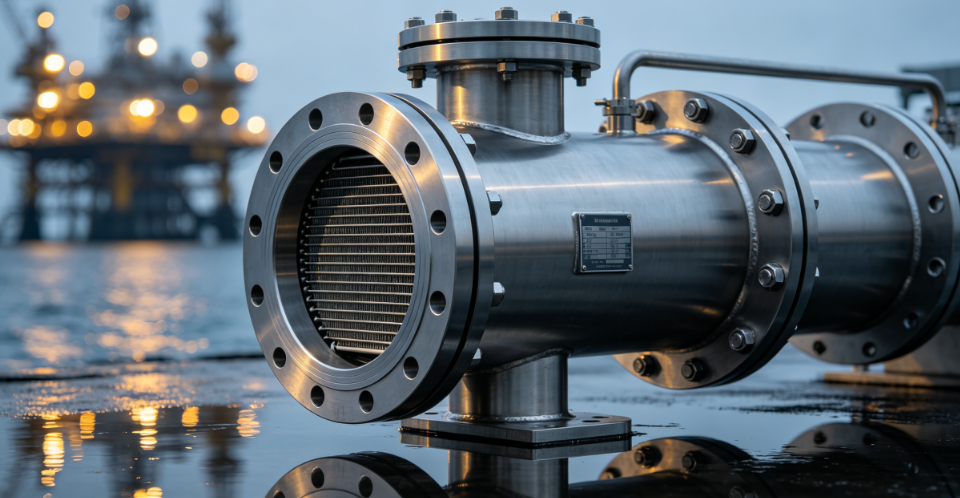
In power plants, desalination facilities, and shipboard systems, titanium heat exchangers transfer heat between seawater and process fluids. Its corrosion resistance ensures these units have a service life of 20-30 years, far longer than copper-nickel alternatives.
Desalination Plants
Both thermal and reverse osmosis desalination plants rely on titanium for components exposed to high-salinity brine. Titanium tubes, pumps, and valves handle the corrosive brine and high pressures without degrading, ensuring reliable production of clean water.
Offshore Oil and Gas Platforms
Offshore rigs use titanium for riser pipes, heat exchangers, and subsea components. Its light weight reduces the load on the platform structure, while its corrosion resistance prevents failures in the harsh saltwater environment.
Shipbuilding and Naval Vessels
Commercial and military ships use titanium for propeller shafts, ballast tanks, and fasteners. Its light weight improves fuel efficiency, and its non-magnetic property is a key advantage for minesweepers and submarines.
Material Selection for Marine Titanium Projects
When choosing titanium for marine applications, it’s important to select the right grade:
Grade 2 Titanium: The most common choice for marine use, offering excellent corrosion resistance and good formability for heat exchangers and piping.
Grade 5 (Ti-6Al-4V): Used for high-stress components like structural parts and fasteners, where higher strength is required.
Always verify that the material meets marine industry standards and has proper documentation for traceability and quality control.
Conclusion
Titanium is the unsung hero of marine engineering, providing unmatched corrosion resistance and reliability in the world’s harshest environments. From desalination plants to offshore oil rigs, its performance enables critical infrastructure to operate efficiently and safely for decades. As marine and offshore projects continue to expand, titanium will remain the material of choice for components that cannot afford to fail.
Applications4 min read·2026-06-09
Titanium: The Unsung Hero of Marine Engineering and Offshore Technology
A CNBJTI guide to titanium’s role in marine engineering, exploring how its exceptional corrosion resistance makes it ideal for seawater applications, key uses in offshore and desalination projects, and material selection tips for buyers.