When choosing between titanium and ceramic for industrial, medical, or consumer projects, there is no universal “better” material. Both offer distinct advantages, but their performance, durability, cost, and suitability vary widely based on your specific use case. This practical buyer’s guide breaks down the key differences to help you make an informed decision.
Introduction
Titanium and ceramic are both prized for their strength, corrosion resistance, and premium feel—but they achieve these benefits in very different ways. Titanium is a ductile metal with a proven track record in dynamic, high-stress environments, while ceramic is a hard, brittle material ideal for static, high-precision applications. Understanding their core trade-offs is the first step to selecting the right material.
Strength, Durability, and Toughness
Titanium excels in strength-to-weight ratio and impact resistance. It is a ductile metal, meaning it can bend and deform under load without shattering. This makes it highly resistant to fatigue, shock, and vibration—critical properties for parts that experience repeated stress, such as aircraft components, medical implants, or outdoor gear.
Ceramic, by contrast, is extremely hard and offers exceptional compressive strength, but it is inherently brittle. It cannot absorb impact energy, and sudden shocks, bending forces, or even minor manufacturing flaws can lead to catastrophic cracking or failure. While ceramic is scratch-resistant, it is far more prone to chipping or breaking under unexpected stress.
Corrosion and Chemical Resistance
Both materials are highly resistant to corrosion, but they handle chemical environments differently. Titanium forms a natural, self-healing oxide layer that protects it from most acids, bases, and saltwater, making it ideal for marine, chemical processing, and outdoor applications. It remains stable in both high and low temperatures, with excellent resistance to thermal shock.
Ceramic is chemically inert and immune to most corrosive agents, making it a popular choice for lab equipment and high-temperature furnaces. However, it is vulnerable to thermal shock—rapid changes in temperature can cause uneven expansion and contraction, leading to cracking. This limits its use in applications with sudden heating or cooling cycles.
Machinability and Production
Titanium is a metal that can be cut, forged, welded, and formed using standard metalworking processes. While it requires specialized tools to handle its strength, it is far more forgiving during manufacturing. Complex geometries, custom parts, and large-scale production are all feasible with titanium, and repairs or modifications are possible even after the initial production.
Ceramic is extremely hard and requires specialized diamond tooling for machining. It must be processed slowly and with great precision to avoid chipping or cracking, especially for complex shapes. Once formed, ceramic parts cannot be easily modified, and any error during production often means the entire part must be discarded. This makes ceramic production more costly and time-consuming for most applications.
Common Applications: Where Each Material Shines
Titanium is the preferred choice for applications that demand a balance of strength, durability, and versatility. In the medical field, its biocompatibility and osseointegration properties make it the gold standard for orthopedic implants, dental screws, and surgical tools. In aerospace and defense, its light weight and heat resistance are used in jet engines, airframes, and fasteners. It is also widely used in consumer goods like watches, jewelry, and cookware, thanks to its hypoallergenic properties and long-lasting finish.
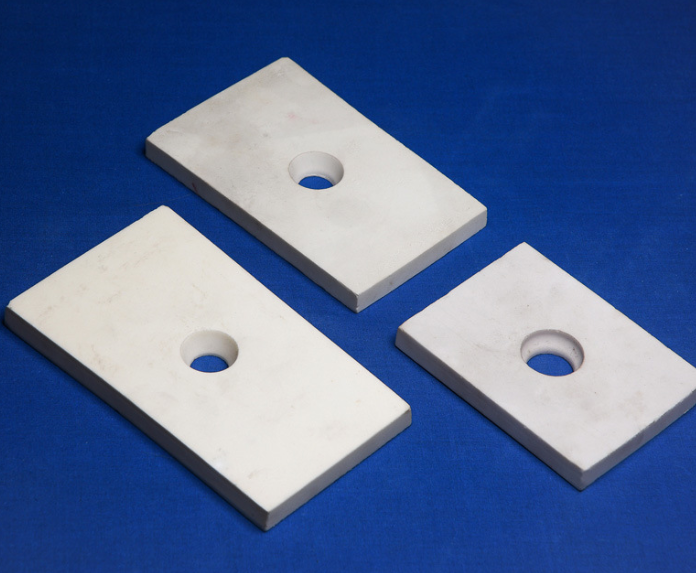
Ceramic excels in applications where hardness, wear resistance, and high-temperature stability are the top priorities. In dentistry, zirconia ceramic is used for crowns and bridges due to its biocompatibility and natural tooth-like appearance. In industrial settings, alumina ceramic is used for cutting tools, furnace components, and precision bearings, where its hardness and heat resistance outperform most metals. It is also popular in luxury consumer goods like watch cases and knife blades for its scratch-resistant, sleek finish.
Key Buyer Considerations
When choosing between titanium and ceramic, ask yourself these critical questions:
Will the part experience impact, vibration, or bending loads? If yes, titanium’s toughness makes it the safer choice.
Is thermal shock or rapid temperature change a factor? Titanium’s resistance to thermal shock is far superior to ceramic’s.
What is the complexity of the part geometry? Titanium is more forgiving of complex shapes and design changes.
What are your cost and lead time constraints? Ceramic’s specialized machining often leads to higher costs and longer production times.
Final Recommendation
Choose titanium if you need a material that can withstand dynamic stress, impact, and fatigue. It is the most reliable choice for medical implants, aerospace components, industrial hardware, and consumer goods that require both durability and light weight.
Choose ceramic if your application is static, low-impact, and demands extreme hardness, wear resistance, or high-temperature stability. It is ideal for dental restorations, furnace parts, precision bearings, and luxury items where brittleness is not a concern.
If you are still unsure which material is right for your project, the CNBJTI team can help evaluate your specific requirements and recommend the best solution, including grade selection, processing options, and sourcing guidance for titanium materials.
Material Comparison5 min read·2026-05-25
Titanium vs. Ceramic: Which Material is Better for Your Application?
Confused between titanium and ceramic for your project? This practical buyer’s guide compares strength, durability, biocompatibility, cost and use cases to help you choose the right material.