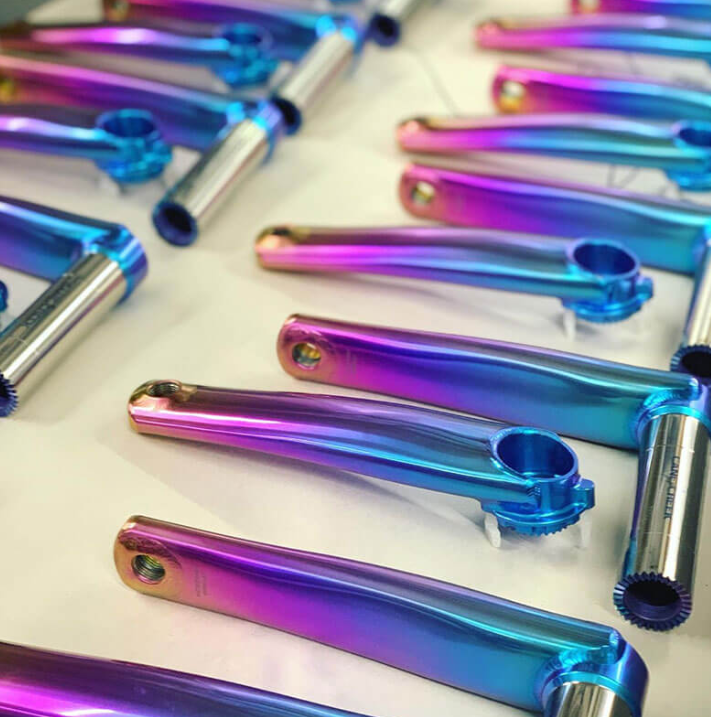
Short answer: Pure, unprocessed titanium has a natural silvery-gray color with a subtle metallic luster, but it can be modified through anodizing, heat treatment, and surface finishing to produce a wide range of vibrant colors.
If you’re a B2B buyer sourcing titanium for jewelry, consumer wearables, aerospace components, or medical devices, understanding titanium’s natural and modified colors is key to meeting your design, branding, and functional requirements. Below, we break down the full range of titanium’s colors, what causes them, and how to choose the right finish for your project.
The Natural Color of Titanium
Commercially pure titanium (Grades 1, 2, 3, and 4) has a consistent, characteristic natural appearance:
Base color: A soft, muted silvery-gray, similar to brushed stainless steel but with a warmer, less harsh tone.
Luster: A subtle, non-reflective metallic sheen, rather than the bright, mirror-like shine of polished chrome.
Consistency: Unlike many metals, pure titanium’s natural color remains stable over time. It does not tarnish, rust, or discolor in normal environments, so its silvery-gray appearance stays consistent for years.
This natural finish is ideal for industrial components, medical devices, and minimalist consumer products where durability and a clean, understated look are priorities.
Modified Titanium Colors: How They’re Created
While titanium’s natural color is silvery-gray, several processes can alter its appearance to meet aesthetic and functional needs:
1. Anodized Titanium Colors
Anodizing is the most common method to add vibrant, permanent colors to titanium. By controlling the thickness of the oxide layer on the metal’s surface, different light interference patterns create a full spectrum of colors:
10–20V: Light gold, bronze, and warm brown tones
20–40V: Bright blues, purples, and magentas
40–60V: Greens, teals, and pink hues
60V+: Deep blues, near-black, and dark gray finishes
Anodized colors are integral to the metal’s surface, so they won’t chip, peel, or fade. They are widely used in jewelry, consumer electronics, and branded products for custom color matching.
2. Heat-Treated or Welded Color Changes
When titanium is exposed to high temperatures (above 300°C), the oxide layer naturally thickens, creating color changes similar to anodizing. This is most commonly seen as a gradient of gold, blue, and purple around weld seams or heat-affected zones. While this is often a byproduct of manufacturing, controlled heat treatment can also be used to create intentional, unique color effects.
3. Surface Finishes and Their Impact
The way titanium is finished can also alter its perceived color, even without changing the material itself:
Polished titanium: A mirror-like finish enhances the metal’s natural luster, making the silvery-gray appear brighter and more reflective.
Brushed or matte titanium: A non-reflective, textured finish softens the metal’s appearance, resulting in a darker, more muted gray tone.
Blasted titanium: Sandblasting creates a uniform, frosted surface that diffuses light, giving the titanium a flat, consistent gray color with no shine.
Common Myths About Titanium Color
Myth 1: “Titanium is naturally silver, but some grades are different colors.”
Fact: All pure titanium grades have the same natural silvery-gray color. Differences in appearance are caused by surface finishes, anodizing, or contamination, not the grade itself.
Myth 2: “Colored titanium is painted or plated.”
Fact: Anodized titanium colors come from light interference with the oxide layer, not paint or dye. The color is permanent and part of the metal surface.
Myth 3: “Titanium turns black over time.”
Fact: Pure titanium does not tarnish or turn black naturally. Any darkening is usually caused by surface residue, improper cleaning, or low-quality coatings.
Choosing the Right Titanium Color for Your Project
For B2B buyers, selecting the right titanium color depends on your application, industry, and design goals:
Medical devices and industrial components: Stick to natural silvery-gray titanium, or medical-grade anodized finishes that meet regulatory standards.
Jewelry and consumer products: Anodized colors offer endless customization options, with pure titanium grades (Grades 1/2) providing the most consistent, vibrant results.
Branded products: Anodizing allows for custom color matching to brand guidelines, creating a unique, recognizable finish.
High-corrosion environments: Natural or anodized titanium finishes both offer excellent corrosion resistance, so color choice can prioritize aesthetics without sacrificing performance.
How CNBJTI Delivers Titanium in Your Desired Color
As a dedicated titanium supplier, we help you achieve the exact appearance and performance you need:
Natural titanium finishes: We offer polished, brushed, and blasted pure titanium parts, with consistent silvery-gray color across production runs.
Custom anodizing services: We provide precise voltage control to match custom color specifications, with quality checks to ensure uniform results.
Grade-specific guidance: We recommend the best titanium grade and surface finish for your desired color and application, ensuring consistent results for high-volume orders.
Compliance support: For medical or aerospace applications, we provide documentation confirming finishes meet industry standards.
Source Titanium in Any Color With Confidence
Whether you need natural silvery-gray titanium or custom anodized colors, CNBJTI can help you select the right material and finish for your project.
Submit your RFQ today for:
Custom color and finish recommendations
Sample development and color matching
Competitive bulk pricing
Support for custom processing and compliance requirements
FAQ5 min read·2026-05-22
What Color Is Titanium?
What color is titanium? Pure titanium has a natural silvery-gray finish, but can be anodized into vibrant colors like gold, blue, and purple. Learn about titanium’s color variations, processing effects, and sourcing tips from CNBJTI.