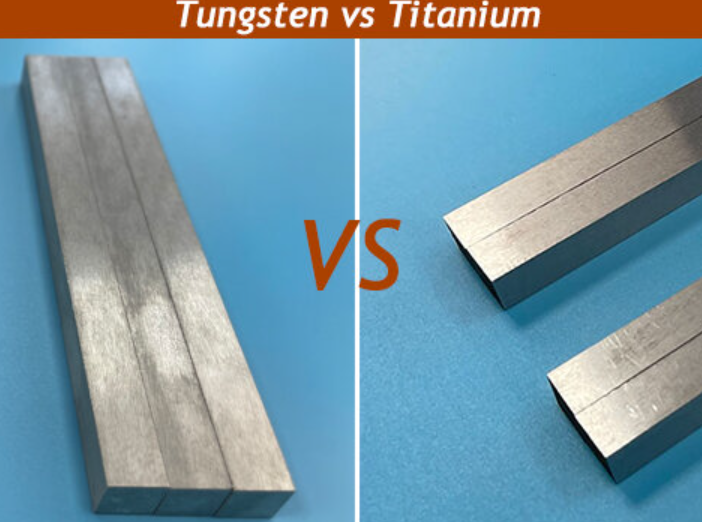
Short answer: When mixed, tungsten and titanium form high-performance alloys that combine titanium’s corrosion resistance with tungsten’s extreme hardness and heat resistance. The result is a strong, durable material ideal for demanding industrial applications.
If you’re a B2B buyer sourcing materials for aerospace components, industrial tools, medical devices, or high-temperature applications, understanding how tungsten and titanium interact is key to selecting the right alloy for your project. Below, we break down their behavior, common use cases, and key sourcing considerations from CNBJTI.
The Basics: Tungsten and Titanium Properties
Before mixing the two metals, it’s important to understand their core properties:
Titanium: Lightweight, highly corrosion-resistant, and biocompatible, but relatively soft compared to tungsten. It melts at 1,668°C and is widely used in aerospace and medical applications.
Tungsten: One of the hardest metals, with an extremely high melting point of 3,422°C and excellent heat resistance, but it is dense and brittle in its pure form.
When combined, their complementary properties create an alloy that addresses the weaknesses of each individual metal.
What Happens When You Mix Tungsten and Titanium?
Mixing tungsten and titanium typically occurs through alloying processes like powder metallurgy or arc melting. The outcome depends on the ratio of the two metals and the processing method, but three key effects are consistent:
1. Increased Hardness and Wear Resistance
Adding tungsten to titanium significantly boosts the alloy’s hardness and wear resistance. Tungsten acts as a hardening agent, creating a material that is far more durable than pure titanium, making it ideal for cutting tools, industrial machinery parts, and components exposed to high friction.
2. Improved Heat and Corrosion Resistance
The combination leverages both metals’ strengths: titanium provides excellent corrosion resistance, while tungsten enhances thermal stability. The resulting alloy can withstand high temperatures without losing its strength or corroding, making it suitable for high-temperature industrial processes and aerospace engine components.
3. Balanced Density and Weight
While tungsten is very dense, mixing it with lightweight titanium results in an alloy that is heavier than pure titanium but far lighter than pure tungsten. This balance makes the material practical for applications where both strength and weight are considerations, such as certain aerospace and automotive components.
Common Applications of Tungsten-Titanium Alloys
The unique properties of tungsten-titanium alloys make them ideal for a range of demanding applications:
Industrial cutting tools and wear parts: The alloy’s extreme hardness makes it perfect for drill bits, saw blades, and machine components that require long life under high friction.
Aerospace and defense components: The combination of heat resistance and moderate weight is valuable for turbine parts, armor plating, and other high-stress applications.
Medical devices: Titanium’s biocompatibility, combined with tungsten’s strength, makes the alloy suitable for certain surgical tools and orthopedic implants where durability is critical.
High-temperature furnace components: The alloy’s ability to withstand extreme heat without degrading makes it useful for furnace linings and heating elements.
Key Considerations for B2B Buyers
When sourcing tungsten-titanium alloys for your project, keep these factors in mind:
Alloy composition: The ratio of tungsten to titanium directly impacts the material’s properties. Higher tungsten content increases hardness but also brittleness, so the right balance depends on your application.
Processing method: Powder metallurgy is often used for tungsten-titanium alloys due to tungsten’s high melting point, ensuring uniform mixing and consistent material properties.
Quality control: The purity of both metals and the precision of the alloying process are critical to avoiding defects like porosity or uneven composition.
Regulatory compliance: For medical or aerospace applications, ensure the alloy meets industry standards and specifications for biocompatibility or heat resistance.
How CNBJTI Supports Your Tungsten-Titanium Alloy Projects
As a dedicated titanium supplier, we help B2B buyers source and process high-performance alloys, including tungsten-titanium combinations:
Custom alloy recommendations: We advise on the optimal tungsten-titanium ratio and processing method for your specific application.
Contamination-free processing: Our controlled manufacturing processes ensure uniform alloy composition and consistent quality across production runs.
Material testing and certification: We provide material test reports (MTRs) and compliance documentation for regulated applications.
Custom machining and finishing: We offer precision machining services to create finished parts to your exact specifications.
Source High-Performance Tungsten-Titanium Alloys With Confidence
If you need tungsten-titanium alloys for your next project, CNBJTI can help you select the right material and processing solution.
Submit your RFQ today for:
Custom alloy composition recommendations
Material testing and compliance documentation
Competitive bulk pricing
Support for custom machining and finishing requirements
FAQ4 min read·2026-05-22
What Happens When You Mix Tungsten and Titanium?
What happens when you mix tungsten and titanium? The two metals can form strong, high-performance alloys with improved hardness and heat resistance. Learn about their behavior, common applications, and sourcing tips from CNBJTI.