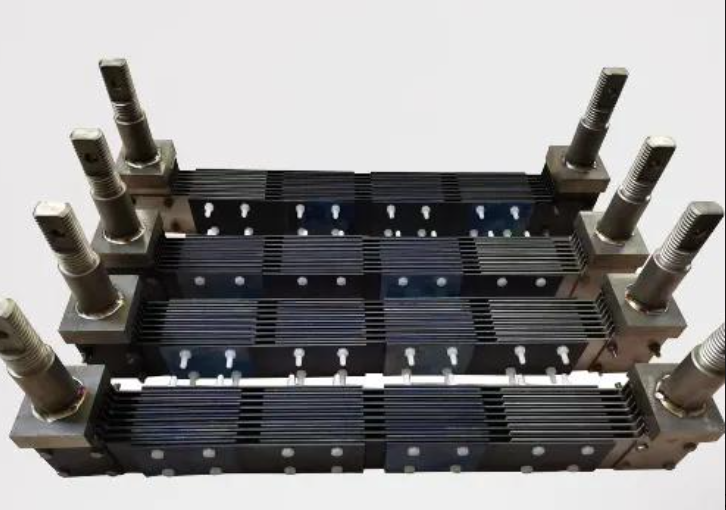
A titanium anode (also known as an MMO/DSA anode, or Dimensionally Stable Anode) is an advanced insoluble electrode, consisting of a pure titanium substrate coated with a thin layer of precious metal oxides (e.g., ruthenium-iridium, iridium-tantalum, platinum). It is the core component of modern electrochemical systems, combining the mechanical strength and corrosion resistance of titanium with the high electrocatalytic activity of precious metal oxides.
Core Structure & Working Principle
Titanium Substrate: Made of industrial pure titanium (TA1/TA2), providing excellent mechanical stability and corrosion resistance to harsh electrolytes.
Catalytic Coating: The functional layer that determines performance. Different coatings are tailored to specific reactions:
Ruthenium-iridium (Ru-Ir): Ideal for chlorine evolution (water disinfection, brine electrolysis)
Iridium-tantalum (Ir-Ta): Optimized for oxygen evolution (wastewater treatment, electrowinning)
Platinum coating: Suitable for high-precision applications (electroplating, sensors)
Working Mechanism: During electrolysis, the anode triggers controlled oxidation reactions, such as chlorine/oxygen evolution, pollutant degradation, or metal deposition, without significant consumption or dimensional change.
Key Advantages for Industrial Buyers
Long Lifespan: Unlike traditional graphite or lead anodes, titanium anodes are nearly insoluble and can last 5–15 years depending on operating conditions, with recoating options available for extended use.
High Efficiency: Low overpotential reduces energy consumption, improving current efficiency and lowering operating costs.
Excellent Corrosion Resistance: Resists degradation in chloride-rich, acidic, or alkaline environments, making it ideal for harsh industrial applications.
Customizable: Available in various forms (plates, meshes, rods, tubes) and coating formulations, tailored to your specific process parameters.
Buyer-Focused FAQ
Q: What grade of titanium is used for anodes?
A: We use high-purity TA1/TA2 industrial titanium as the standard substrate, with options for alloy grades (e.g., Ti-Pd) for special corrosion-resistant requirements.
Q: What certifications do your anodes have?
A: Our products comply with ISO 9001 quality standards, and we can provide third-party test reports for coating composition, current efficiency, and lifetime testing upon request.
Q: What information do I need to provide for an RFQ?
A: To offer an accurate quote, please share:
Application scenario (e.g., wastewater treatment, electroplating, brine electrolysis)
Electrolyte composition (chloride concentration, pH, temperature)
Current density and operating voltage
Desired form factor (plate/mesh/rod, dimensions, coating type)
Quantity and lead time requirements
Q: Can you recoat old titanium anodes?
A: Yes! If the titanium substrate is intact, we can strip and recoat the anode with new precious metal oxides, significantly reducing your replacement costs.
FAQ6 min read·2026-05-23
What Is a Titanium Anode?
A practical, buyer-focused guide to titanium anodes from CNBJTI, covering core definitions, key grades, processing details, certification standards, and RFQ essentials to help you select the right anode for your electrochemical applications.