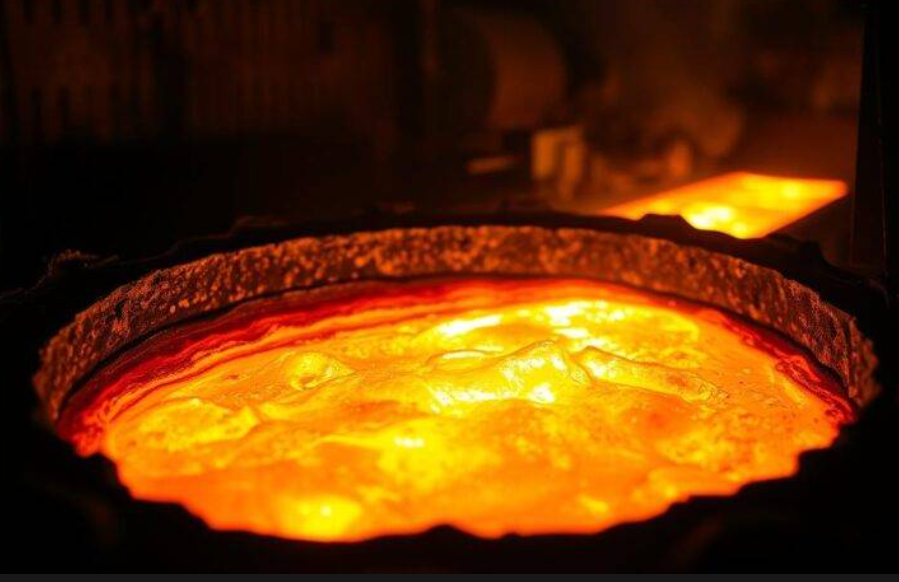
If you’re sourcing titanium for high-temperature applications — whether in aerospace engines, industrial furnaces, or medical implants — you’ve probably asked: “What is the melting point of titanium?” It’s a critical detail that directly impacts how the material performs under heat, how it’s processed, and whether it’s right for your project.
In this guide, we’ll break down the melting point of pure titanium, how alloying affects it, and what this high-temperature resistance means for your procurement decisions.
What Is the Melting Point of Pure Titanium?
At standard atmospheric pressure, pure titanium melts at 1668°C (3034°F). That’s significantly higher than common metals like steel (around 1500°C) and aluminum (just 660°C). This high melting point comes from titanium’s strong metallic bonds, which require extreme heat to break apart.
It’s important to note that “melting point” isn’t the only temperature that matters. Titanium undergoes a phase change (from hexagonal close-packed α-phase to body-centered cubic β-phase) at around 880–970°C, depending on the grade. This change affects the material’s strength, ductility, and formability — even before it gets close to melting.
How Alloying Affects Titanium’s Melting Point
While pure titanium has a fixed melting point, common titanium alloys have slightly different values. Alloying elements like aluminum, vanadium, molybdenum, and nickel can lower or raise the melting point, depending on their properties.
Commercially pure (CP) titanium (Grades 1–4): Melting point stays very close to pure titanium, around 1660–1670°C.
Ti-6Al-4V (Grade 5): The most common titanium alloy has a melting point of about 1604–1660°C. The addition of aluminum and vanadium slightly lowers the melting point but improves high-temperature strength and heat treatability.
High-temperature alloys (like Ti-6242): Designed for extreme heat, these alloys maintain strength at temperatures up to 600°C, even if their melting point is slightly lower than pure titanium.
For most industrial and aerospace applications, the alloy’s service temperature (how hot it can get without losing strength) is more important than its absolute melting point.
Why Titanium’s Melting Point Matters for Your Project
A high melting point isn’t just a number — it’s the reason titanium excels in environments where other metals fail. Here’s how it impacts real-world use:
1. High-Temperature Industrial Applications
Titanium’s high melting point makes it ideal for components that see constant heat, like heat exchangers, furnace parts, and chemical processing equipment. Unlike stainless steel, which can lose strength and corrode at temperatures above 500°C, titanium maintains its structural integrity far longer.
2. Aerospace & Aviation
Aircraft engine components, turbine blades, and exhaust systems face extreme heat at high altitudes. Titanium’s high melting point, combined with its low density, makes it the perfect material for these parts — it can handle the heat without adding unnecessary weight to the aircraft.
3. Welding & Fabrication
When working with titanium, its high melting point affects how it’s welded and machined. Titanium requires high-temperature welding processes (like TIG welding with pure argon shielding) to prevent contamination, and the material can be tricky to machine because it retains heat. For buyers, this means working with suppliers who have experience handling high-temperature titanium processing.
4. Medical & Dental Implants
While medical implants don’t reach melting temperatures, titanium’s high melting point means it can withstand the high heat of sterilization processes (like autoclaving at 134°C) without degrading or releasing harmful contaminants. Its biocompatibility and heat resistance make it a safe choice for permanent implants.
Common Misconceptions About Titanium’s Heat Resistance
It’s easy to confuse “melting point” with “maximum service temperature.” Here are two key myths to clear up:
Myth: Titanium can safely operate at temperatures near its melting point.
Reality: No metal can withstand temperatures close to its melting point for long. For most titanium alloys, the practical maximum service temperature is around 400–600°C. Above that, the material loses strength and becomes more prone to oxidation.
Myth: All titanium grades have the same heat resistance.
Reality: CP titanium (Grades 1–4) has good corrosion resistance but lower high-temperature strength. Alloyed grades like Grade 5 offer better strength at high temperatures, even if their melting point is slightly lower.
What This Means for Your Titanium Procurement
When choosing titanium for your project, don’t just focus on the melting point — consider the full picture:
What’s the maximum operating temperature of your application?
Do you need high strength at heat, or just corrosion resistance?
Will the material require welding, machining, or heat treatment?
For most buyers, working with a supplier who can match the right titanium grade to your temperature and performance requirements is more important than knowing the exact melting point.
Final Thoughts
Titanium’s melting point of 1668°C is one of the highest among common structural metals, making it a go-to choice for high-temperature applications where strength, corrosion resistance, and durability are non-negotiable. While alloying can slightly adjust this number, the material’s core heat-resistant properties remain intact.
By understanding how titanium performs at high temperatures, you can make smarter procurement decisions, choose the right grade for your project, and ensure your titanium components will stand up to the heat for years to come.
FAQ4 min read·2026-05-21
What Is the Melting Point of Titanium? A Buyer’s Guide to Titanium’s High-Temperature Performance
Discover the melting point of pure titanium and common alloys, how high heat affects titanium’s performance, and why it matters for your aerospace, medical, or industrial projects.